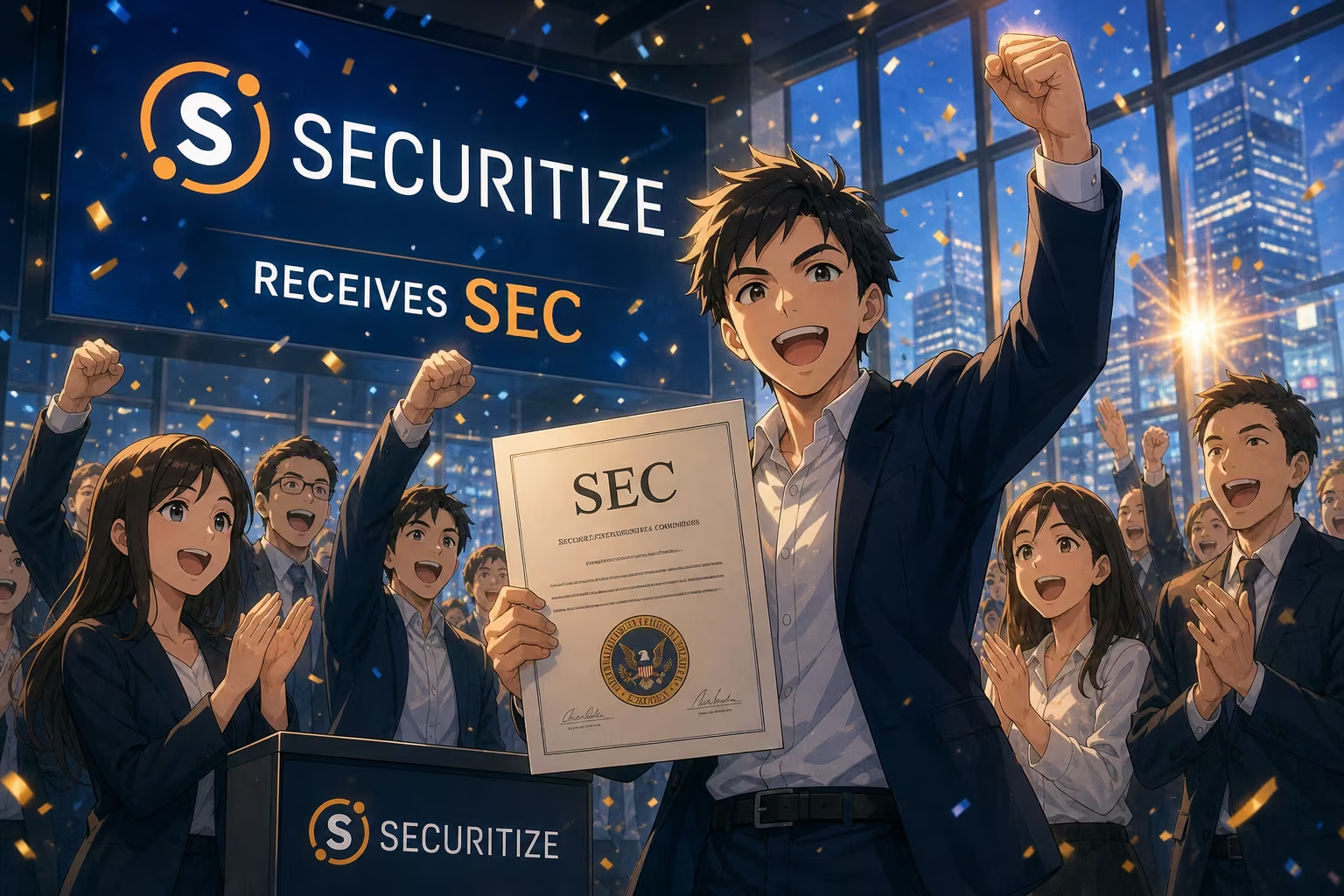
Securitize clears a major regulatory hurdle as the SEC declares its Form S-4 effective, paving the way for a NYSE listing via Cantor Equity Partners II and signaling a new era for tokenized securities.
Securitize Gets the Green Light: What It Really Means for Tokenization
For those of you that have been closely following the tokenization space, you already know that Securitize just passed a major hurdle. Their Form S-4 registration statement has been declared effective by the SEC. That’s not a small procedural step it’s a real milestone both for the company and for the broader push to bring digital assets into regulated markets.
Let’s look at what really happened. The approval directly enables Securitize’s merger with Cantor Equity Partners II, a SPAC sponsored by Cantor Fitzgerald. Yes, another SPAC deal but the fit here makes sense. Securitize provides the tech and compliance architecture, Cantor provides serious market credibility and institutional reach. They are jointly targeting a NYSE listing under the symbol SECZ. That’s the idea and now the way is clear.
Don’t confuse this clearance with the finish line. The gun goes off. Next, a shareholder vote is set for June 29, 2026. The vote is on whether to allow the merger to go ahead. And if it does? Then the real work begins: pinning down the effective IPO pricing, building investor relations and launching a marketing effort squarely focused on the institutional players on the sidelines.
This approval has regulatory significance beyond Securitize, of course. The SEC doesn’t give these endorsements out willy-nilly. The agency’s approval of Securitize’s registration shows that tokenized securities can fit into existing frameworks if done well. That makes it so obvious. It reduces the uncertainty that’s held back many traditional finance firms from diving in. And it’s a precedent: other tokenization platforms now know a little better where to go.
What Shareholders Should Know and Why the Infrastructure Matters
And if you’re a Securitize shareholder, pay attention. That June 29 vote is no rubber stamp. You will be voting to approve the merger, which effectively will make you Securitize Corp. You must be a share holder as on record date and further details will be communicated through formal intimation. And yes, a “no” vote could sap momentum, create uncertainty and potentially hurt valuation. It’s a huge opportunity to tap into public markets, more liquidity, a much bigger stage, a “yes” vote, meanwhile.
The company is aware of this. They will send out detailed proxy materials well in advance of the vote. Go read them. What happens here is going to define what Securitize can be in the next five years.
Infrastructure: Where the Real Work Gets Done
Here is where things get interesting under the headlines. Securitize is not just chasing a listing, it has been quietly building the plumbing for tokenized assets at scale. Their NYSE partnership isn’t a logo deal. It’s to allow tokenized securities to be traded within a regulated environment. That means order books, trade execution, compliance monitoring all the boring but necessary stuff that makes markets work.
And then there’s Computershare. If you know shareholder services, you know Computershare is the gold standard. They’re helping to manage the entire lifecycle of tokenized assets issuance, record-keeping, transfers, corporate actions. It is a huge vote of confidence from the legacy finance world.
And don’t forget the role of Jump Trading and Jupiter. These aren’t little names. They are helping to build a regulated trading infrastructure that can handle real volume, real liquidity and real institutional money. The objective is simple: make tokenized assets indistinguishable from trading a stock or an ETF. Do not rub. No guessing. conformance and operation only.
BlackRock’s Role and the Broader Market Implications
The BlackRock partnership warrants attention and rightly so. But let’s be clear about what that means. Securitize, BlackRock Announce Launch of Tokenized Treasury Fund This isn’t a pilot or a proof of concept. It’s a live product that provides institutional investors access to treasury securities via blockchain rails. There are real efficiency benefits. Faster settlement. Greater transparency. Fractional access.
Related: BlackRock Bitcoin ETF Sees $2.43 Billion Outflows: What It Really Means for Bitcoin
They are also constructing a stablecoin reserve vehicle. That’s looking ahead. Done well, it could provide a regulated, transparent alternative to cash management for digital asset portfolios. And when you get sign-off from BlackRock’s compliance and risk teams, the rest of the market listens.
These partnerships are not just credibility boosts. They are levers of strategy. They tell the market Securitize isn’t building in a silo it’s working within the existing financial system instead of trying to replace it. That’s a better, more sustainable way.
Market Implications: Why This Listing Matters Beyond Securitize
So why should anyone outside of Securitize care about this listing? That’s because it’s a harbinger.
For years, tokenization has been stuck in a loop: interesting tech, unclear regulation, hesitant institutions. Securitize going public on the NYSE changes that dynamic.” It demonstrates that a company built on tokenizing real-world assets can meet the same disclosure, governance and compliance standards as any traditional public company.”
Regulatory progress has not been uniform across the sector, however. As discussed in SEC Delays Tokenized Stocks Proposal Amid Market Integrity Concerns, regulators continue to scrutinize how tokenized securities should operate within existing market structures, particularly around investor protection, liquidity, and market integrity.
That has consequences. Institutional investors that have been on the sidelines now see a way forward. They don’t have to choose between innovation and safety regulation. Securitize is proving they can have both.
And it also squeezes competitors. If you are another tokenization platform, you can’t say “regulation is too unclear” anymore. Here’s the plan. The SEC has shown it will sign off on these structures if done right. The question is, can you meet the same standards?
And let’s talk about liquidity. Going public is not just about raising capital; it also creates a liquid market for the company’s own stock. That’s unlike tokenizing outside assets. It means Securitize’s own equity is a liquid proxy for the whole tokenization sector. That’s a convenient on-ramp for investors who want exposure to this space without buying individual tokenized assets.
The Road Ahead: No Excuses
We are past the experimental stage. “That’s the real lesson.” The SEC approval, the NYSE partnership, the BlackRock products are not events in isolation. They’re indicators that tokenization is moving from “emerging technology” to “regulated financial service.”
That does not mean the road is easy. Shareholder votes can be wrong. Market conditions are shifting. Regulatory scrutiny does not lessen after one approval, it increases. But Securitize has done what few others have done: built a compliant, scalable, institution-friendly platform and now has the green light from regulators to go public.
The message to the rest of the industry is clear. The infrastructure is there. Regulatory framework is being set up”. And the first mover in this next phase is getting ready to go public on the NYSE. Let’s see what happens next, not only for Securitize but for all those who want to follow in its footsteps.
Related: European Banks Plan Euro Stablecoin with Fireblocks Partnership