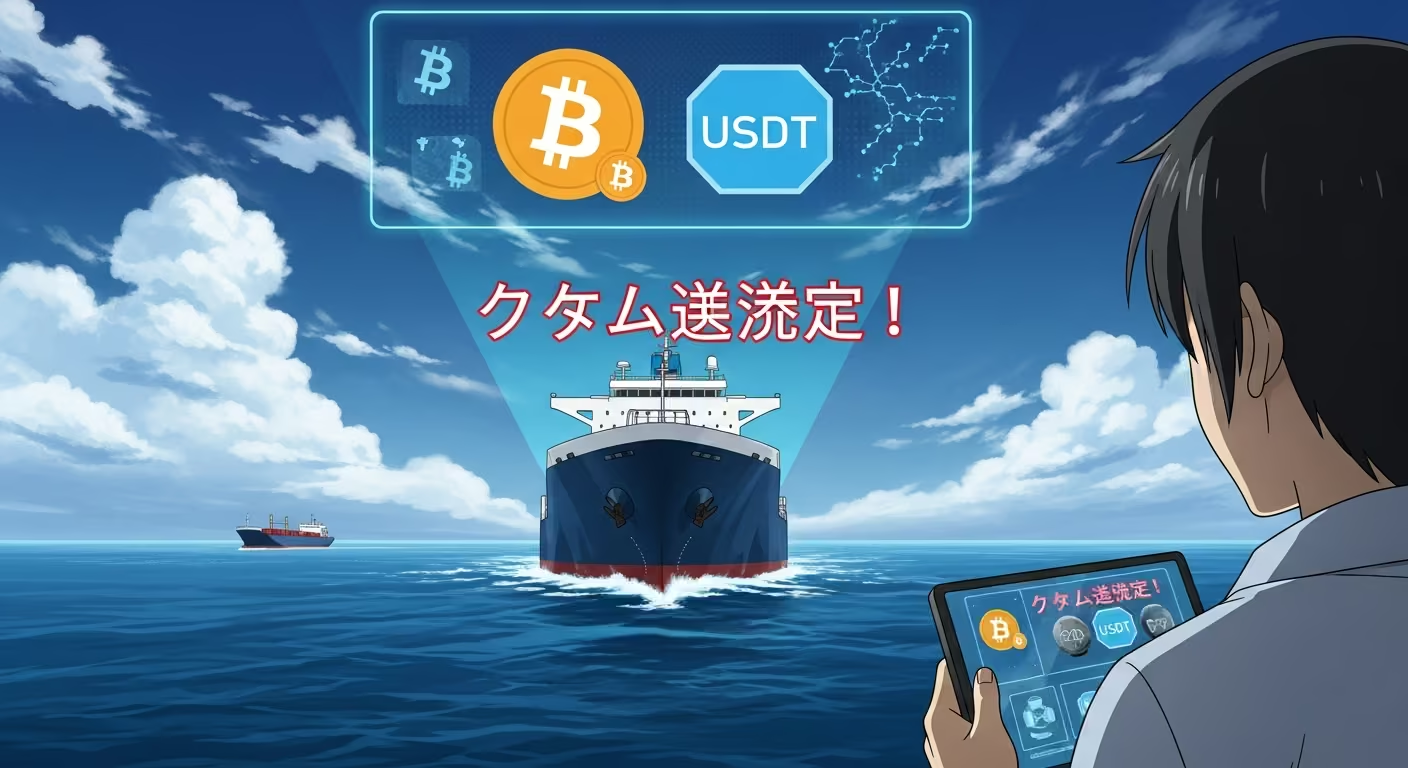
Scammers posing as Iranian officials demand Bitcoin and USDT for safe passage through the Strait of Hormuz, exposing shipping firms to financial and legal risks.
Scammers Are Targeting Shipping Companies Near the Strait of Hormuz
Let’s be honest: the Strait of Hormuz is already a very stressful place to work. Shipping companies that work that route have to deal with geopolitical tensions, stricter security, and the constant threat of delays or detention. Scammers have now found a way to make things even worse.
In the last few months, we’ve seen a clear rise in scams that target shipowners and operators in the area. The playbook is the same every time. Someone gets in touch, usually through email or a messaging app, pretending to be an Iranian official. It could be the port authority or the military. The identity is fake, so it doesn’t really matter. The important thing is the effect: the scammer wants you to think they have power over your ship’s safe passage.
They make it seem like they need to do it right away. They might say something like, “You need to clear your transit approval right away,” or “If you don’t respond within 24 hours, you won’t be able to pass.” That pressure is on purpose. It is meant to mess up your normal verification process.
And here’s the kicker: they want to be paid in cryptocurrency. Most of the time, it’s Bitcoin (BTC) or Tether (USDT). Why? Because crypto keeps their identity secret. You can’t get those coins back once you send them. There is no bank to call, and the transaction can’t be reversed. Payment methods that are old leave a trail. When used this way, crypto doesn’t.
How the Scam Operates
The way the scam is set up usually follows a set pattern. First, the scammer sends fake documents that are often believable. At first glance, these might look like real Iranian government forms, complete with stamps and seals. The goal is simple: to make you believe they’re the real thing.
After you read the papers, they tell you a story about how to give someone else control over your ship’s movement. They could say that a new “transit coordination protocol” is in place or that your ship has been marked for extra scrutiny. None of that is true, but it sounds like it came from a government office. And for a shipping company that is already on edge, this can be enough to make them doubt.
From there, the pressure builds. A lot of calls. Messages that keep coming. Threats of seizure or a delay that lasts forever. The scammer wants to keep you interested, worried, and finally willing to send crypto to an address that can’t be tracked. And since the Strait of Hormuz is really unstable, the fear they’re using isn’t unfounded; it’s just being used as a weapon.
Related: $2 Million Lost: The Coinbase Support Scam Associated with a Canadian Actor Comprehending the Coinbase Support Scam
Global Impact of Strait Disruption
To get why this scam works, you need to know how important the Strait of Hormuz really is. This is a narrow waterway that separates Oman from Iran. At its narrowest point, it is only 21 nautical miles wide. But how big it is doesn’t matter. About one-fifth of the world’s oil exports have gone through it in the past. If you add shipments of liquefied natural gas (LNG) to the mix, you have a chokepoint that has a direct effect on energy prices in every major market.
Shipping companies have to deal with immediate, real-world problems when tensions rise and access becomes unclear. The cost of insurance goes up. Planning a trip turns into a nightmare. And if you have to change your route, like going around the Arabian Peninsula and through the Cape of Good Hope, it adds thousands of miles to your trip. That means more fuel, more time, more crew costs, and more chances of other problems, like bad weather or piracy.
The first problems don’t stay small. They spread out. A tanker that is late means that the refinery will also be late. That can make supply tighter, raise spot prices, and eventually lead to higher heating or fuel costs for consumers. Shipping companies are really feeling the strain of running their businesses. Every day that a ship sits still or takes a detour, it costs money.
And that stress gives criminals a chance. Scammers fill the gap when real ways to talk to each other become blocked or unclear. They know you’re already worried. They know that regular checks might take longer than usual. They also know that asking for $50,000 in Bitcoin might seem cheaper than having their ship seized or breaking a contract, even though it hurts.
So they change. They learn how to talk about maritime operations. They look like official letters. They ask for cryptocurrencies like BTC or USDT because those kinds of transactions can happen across borders without the kind of oversight that would raise a red flag for a suspicious payment. They are counting on that lack of oversight in a world where there is already geopolitical tension.
Legal Risks of Paying Scam Fees
A lot of people don’t think about this until it’s too late: paying a scammer isn’t just a loss of money. It could become a legal problem. You don’t really know where your Bitcoin or Tether goes when you send it to an address given to you by someone pretending to be an Iranian official. It could be a lone con artist. It could also be a wallet linked to a terrorist group, a sanctioned group, or an illegal network. Once that transaction is added to the blockchain, it can’t be changed.
Blockchain analytics companies like Chainalysis have found cases where cryptocurrency payments from maritime scams came from addresses that were already linked to evading sanctions or criminal finance. Even if you were tricked, regulators and financial intelligence units might not care. From their point of view, you helped money flow to a counterparty with a lot of risk. That is enough to make people look into it.
Now think about the sanctions that other countries have put in place. The U.S., EU, and UN all have sanctions that target certain people, groups, and sectors in Iran. If you pay someone who says they are from the Iranian government without checking their identity, it could be seen as breaking those sanctions. Not knowing the scammer’s real name is not a good defense very often. Companies that have made these kinds of payments have been fined, had their operations limited, and had their reputations hurt in the past.
Then there’s the real pain of trying to get the money back. You can’t just ask for a chargeback with crypto. You can’t call the bank and say you didn’t make the transaction. The money is basically gone once the scammer has the private keys. And even when the police get involved, it takes a long time, is hard, and often doesn’t work to track down crypto through mixers or multiple wallets.
So the legal effects are not just ideas. They can include fines, broken rules, frozen accounts, and even limits on where you can go in some places in the future. The same cryptocurrency that makes it hard for scammers to be found also leaves a permanent public record that investigators can read, even if they can’t always tell who owns the wallet right away. That means that even if you paid with false information, the payment is still on the record.
For shipping companies that work near the Strait of Hormuz, the lesson is clear: what seems like a small, easy payment to get past a bureaucratic roadblock can turn into a much bigger problem with compliance and enforcement. The loss of the fee is only the start.