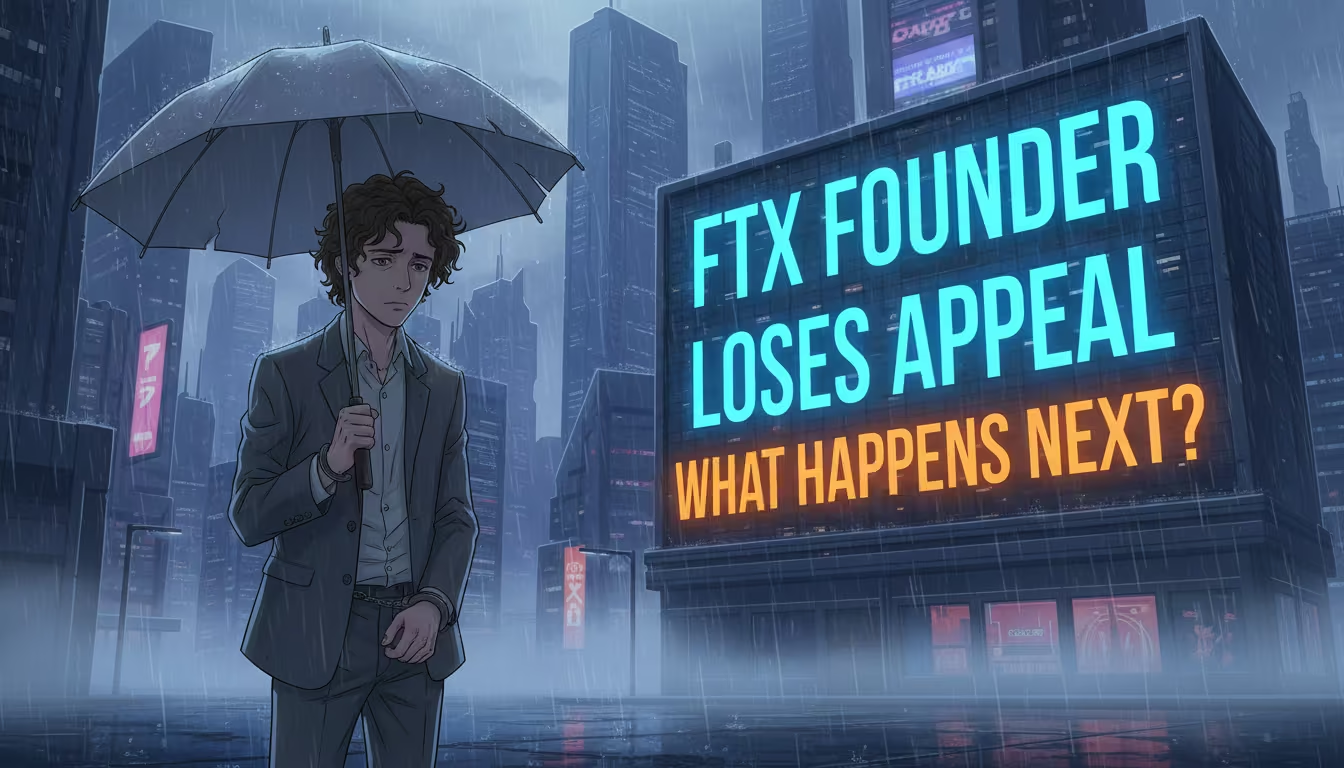
Sam Bankman-Fried’s appeal has been denied, leaving few legal options beyond a potential presidential pardon. Here’s what the ruling means for SBF, FTX, and the future of crypto regulation.
Sam Bankman-Fried Loses Appeal: What Happens Next for the FTX Founder?
Here’s the bottom line: Sam Bankman-Fried just lost his appeal. That wasn’t a huge surprise for anyone paying attention to the collapse of FTX but it does narrow his path forward considerably. So what does this denial mean and where does SBF go from here?
Understanding the Appeal Denial
First, it’s helpful to know how federal appeals work in cases like this one. An appeal is not a do-over. No new jury, no new evidence, no second chance to argue that the customer losses weren’t really his fault. Instead, a panel of three judges from the federal appeals court reviews the original trial record to see whether the judge made any major legal errors errors serious enough that they may have changed the verdict. Things like botched jury instructions, improperly admitted evidence, procedural screw-ups that violated the defendant’s rights.
The burden was on the appellant: Bankman-Fried’s lawyers had to point to specific errors and show they weren’t harmless. That’s a tough hurdle. The majority of appeals fail. And the panel didn’t buy the arguments in SBF’s case. The denial means the lower court ruling stands his conviction and sentencing very much alive.
Let’s take a step back to the conviction itself, because that context matters. Bankman-Fried was convicted of multiple counts of fraud and conspiracy related to FTX’s collapse. The central claim? He took billions of dollars of customers’ money that people trusted FTX to keep safe and moved it to his crypto trading firm, Alameda Research. Alameda used that money to cover its own losses and risky bets, while SBF publicly insisted that FTX was financially sound.
The prosecution had a difficult task. They also had internal financial records, testimony from his inner circle (including former colleagues who pled guilty and cooperated) and messages that showed Bankman-Fried knew exactly what was going on. The jury didn’t see recklessness. They saw calculated deception. The judge said SBF kept reassuring investors and customers even as the house of cards was clearly collapsing. It was that awareness that intent that turned a business failure into a fraud conviction.
The Remaining Legal Options and the Pardon Question
So now the appeal is gone. What happens now?
The most discussed option is a pardon. Bankman-Fried’s team is reportedly considering an application to the President of the United States. Let’s be clear: this is not a legal right, it is a political one. A pardon is not a judicial act; it is an act of the executive department. And in this case, that’s President Donald Trump.
Given Trump’s history of issuing clemency in high profile cases, sometimes to white collar defendants with compelling personal stories or political connections, it’s not a completely outlandish notion.
But do not confuse possibility with probability. The process involves applying for a pardon with supporting arguments. Historically, successful clemency applicants talk about such things as disproportionate sentences, genuine remorse, post-conviction rehabilitation, or significant contributions to society or an industry. Bankman-Fried’s lawyers might try to paint him as a flawed visionary who, even through the disaster, helped push the crypto space forward. They could argue that the sentence was too harsh given the novel legal landscape around digital assets.
Whether that flies depends on factors beyond the law – the political climate, public feeling about crypto, and whether the White House sees any upside. Trump has demonstrated a softness on some financial criminals in the past, especially those with clout or a sympathetic angle. FTX burned ordinary people for millions and the headlines were brutal. A pardon for SBF would be controversial and that may make it less likely unless there is a strong strategic reason.
It’s one of the few doors left open, though. Bankman-Fried has few other options, short of a pardon. He could appeal to the Supreme Court for a writ of certiorari, but the Court hears only a small fraction of criminal appeals and mostly on major constitutional issues, not routine fraud cases. He could also seek a new trial based on newly discovered evidence or juror misconduct, but there’s no indication anything like that is available.
So realistically? He’s looking at serving out his sentence unless the political winds change dramatically.
Why the SBF Case Is Reshaping Crypto Regulation
Now let’s take a step back and discuss what this case means beyond the fate of one man. The SBF conviction is already changing the crypto industry, not through new legislation yet, but through deterrence by example. Crypto has been in a gray area for years. Founders were fast, they broke things and they often used customer assets as their own personal war chest. FTX was the wake up call. The takeaway from this ruling: fraud is fraud, blockchain or no blockchain.
Related: Prediction Markets Give SBF 12% Chance of a Trump Pardon After CZ Case
Regulators are watching. The SEC and CFTC have increased enforcement actions against exchanges and DeFi projects. You’re seeing calls for more transparent rules on custody of digital assets, mandatory reserves and audit trails. Some lawmakers want to treat crypto like traditional finance. Some want a whole new framework. Either way, the days of “ask for forgiveness, not permission” are numbered.
This is a pattern we have seen before. Remember BitConnect?
That was a textbook Ponzi scheme dressed up in crypto clothes. Another was OneCoin, a fake currency sold to the masses. Both led to convictions, jail time and regulatory backlash. But those were minor players. FTX was meant to be the flagship exchange. If the flagship goes down, the whole fleet will hear about it.
The difference with SBF’s case is the size and the visibility. He was a political donor, a media darling, a guy who testified in front of Congress. His downfall is the sort of story that will shape how judges and juries view crypto fraud cases to come. It also forces regulators to act more quickly because the public now understands the real-world harm.
Related: CFTC Chair Claims Biden Administration Targeted Winklevoss Twins in Gemini Case
The Lasting Legacy of the FTX Collapse
The message to investors and entrepreneurs in space is simple: due diligence is no longer optional. You can’t just trust a hoodie-wearing, spreadsheet-wielding charismatic founder. Real audits, third party custody, transparent reserves. These are becoming baseline expectations. They’re rounding up the cowboys.
And for those who are thinking of stretching the law? Think again, says the case. The DOJ has demonstrated it can unravel complex crypto transactions, track the money on-chain and persuade a jury beyond a reasonable doubt. Bankman-Fried’s appeal denial drives that message home: the courts aren’t going to second-guess a well-prosecuted fraud case just because it happened on a blockchain.
So what next for Sam Bankman-Fried? Unless he gets a pardon and that’s a long shot he’ll sit in prison. His lawyers will continue to file motions, but the window for any meaningful relief is rapidly closing. Meanwhile, the industry that he once dominated is moving on more cautious, more regulated, and much less tolerant of the kind of risk-taking that took FTX down.
That is the real legacy of this case. Not just one man’s downfall, but a revolution for an entire industry.