
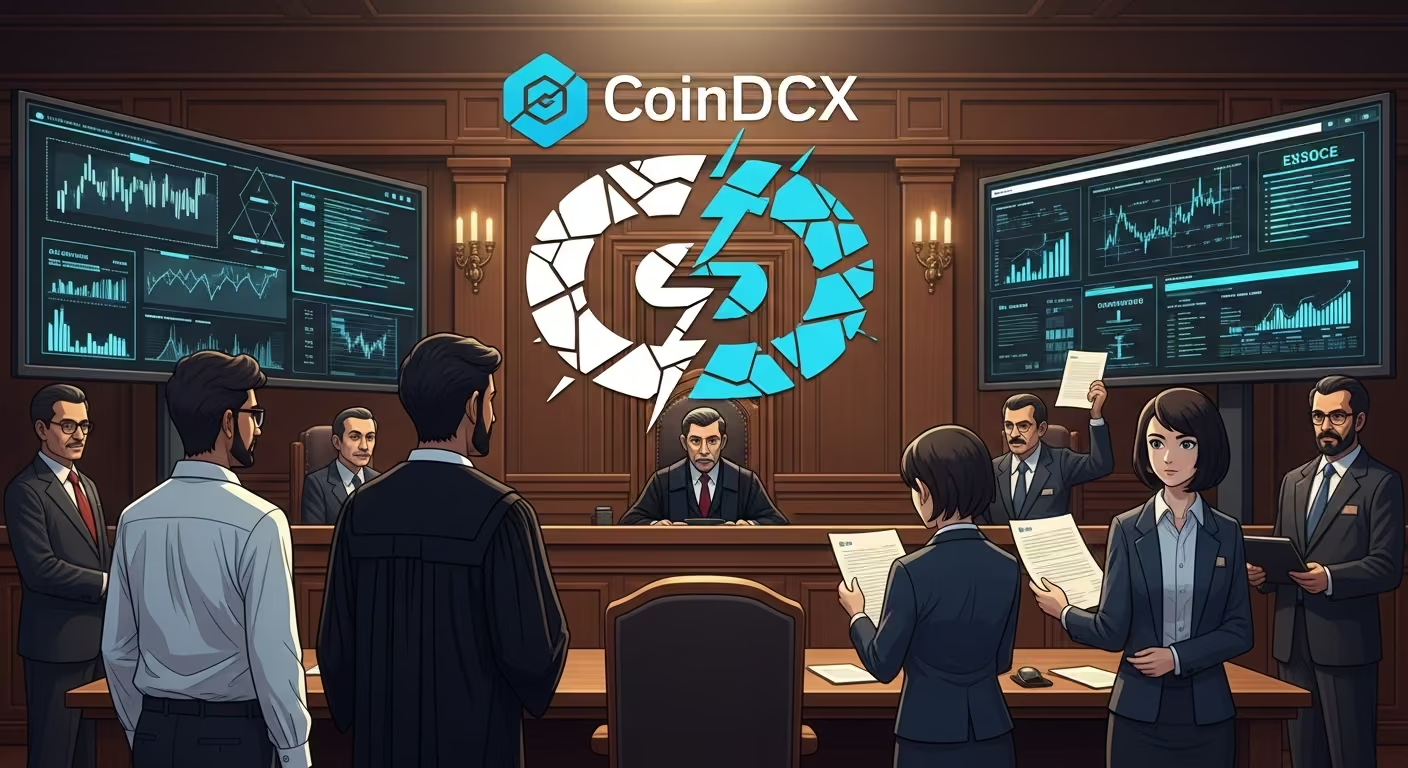
CoinDCX founders face scrutiny in a fraud investigation, highlighting India’s evolving regulatory approach to crypto exchanges and investor protection.
CoinDCX Investigation: A Turning Point for Crypto Regulation in India
If you’ve been following the intersection of Indian crypto regulation and enforcement, the ongoing situation with CoinDCX co-founders Sumit Gupta and Neeraj Khandelwal is one to keep an eye on. What started as a small investigation by the Thane police has quickly turned into a test case for how Indian authorities might deal with fraud claims against well-known cryptocurrency platforms.
Let’s look at what is really going on and what is still just a guess.
The Core Allegation: Fake Platform and Investor Deception
The main focus of the investigation is a claim that a fake investment platform, which ran a fake website, was used to attract retail investors with promises of high-yield crypto returns. The main point is that this site lied about being linked to CoinDCX—or at least used the exchange’s name recognition to trick people into giving them money. Authorities are now looking into whether the founders were directly or indirectly involved in that operation, or if it was just a case of third-party fraud that used the exchange’s name to make it look like it was real.
Related: $2 Million Lost: The Coinbase Support Scam Associated with a Canadian Actor Comprehending the Coinbase Support Scam
Following the Money: Legal and Technical Investigation
The police are concentrating on financial trails from a legal standpoint. They are following the money trail of transactions linked to the alleged fraudulent site, interviewing possible victims, and working with forensic and cybersecurity experts to map out the infrastructure behind it. That last part is very important. In these kinds of cases, the investigation usually gets bigger or smaller based on the technical details of the fake website, like who registered the domain, where the hosting is located, and whether any of the site’s operators had ties to the exchange.
Direct Involvement or Platform Impersonation?
The framing is what stands out here. Early reports said that the founders might have planned the scheme themselves. But as more information has come to light, it looks less like direct involvement and more like a classic case of platform impersonation. This is something that has become more common as more people in India start using cryptocurrencies. Scammers set up fake domains that look a lot like real ones, often with almost the same branding, and then steal user deposits while the real exchange has to deal with the regulatory fallout.
That difference is important. If the investigation finds that Gupta and Khandelwal weren’t involved in running the fake site and that CoinDCX wasn’t used to carry out the scam, it will likely show how important it is for exchanges to protect their brands and respond quickly to incidents. If, on the other hand, investigators find proof of carelessness—or worse, coordination—then the effects on the whole industry could be very bad.
Market Reaction: Concern vs. Perspective
Investors have reacted with a mix of worry and common sense. People who use exchanges for retail are understandably worried. When police question the leaders of an exchange, even just for an investigation, it makes sense that people would wonder about the safety of their money. But institutional investors and people who know how these investigations usually go are more level-headed about it. Most people know that being called in for questioning is not the same as being charged. They also know that in India’s current regulatory climate, law enforcement often casts a wide net when looking into financial fraud, especially in new areas like crypto.
Related: A Complete Guide to Understanding Cryptocurrency Exchanges and Wallet Providers
Regulatory Implications for India’s Crypto Industry
Some lawyers I know say that this case could speed up a change in how Indian regulators deal with the crypto ecosystem. For the last few years, the main focus has been on following AML rules, filing taxes, and getting rid of offshore exchanges that aren’t registered with the FIU. But looking into fraud involving the leaders of registered, compliant exchanges is a whole other level of scrutiny. It means that the government isn’t just checking to see if exchanges are following the rules anymore. They’re also checking to see if the leaders of those exchanges can be held responsible when bad people use their platform’s reputation.
That has real effects on the plan for how to regulate things. We might see exchanges have to follow stricter rules about how they work, especially when it comes to monitoring domains, protecting brands, and reporting attempts to impersonate someone. There may also be stricter due diligence rules for the leaders of exchanges, similar to the “fit and proper” rules used in traditional finance.
Structural Weakness: Retail Investor Protection
This investigation brings to light a weakness that has been clear for years: retail investors in India often have a hard time telling the difference between real exchanges and well-designed scams. A clearer set of rules that requires third-party audits, cybersecurity certifications, and faster ways to settle disputes would help a lot to close that gap. But rules can be bad and good at the same time. If done right, it builds trust and lets institutional capital in. If done wrong, it can keep incumbents in power and stop the innovation that makes crypto so interesting in the first place.
Industry in Wait-and-See Mode
The industry is in wait-and-see mode for now. The investigation is still going on, and no one can be sure of anything until the Thane police either file formal charges or close the case. But one thing is clear: this isn’t just about one exchange or two founders. It’s a test case for how India deals with crypto-related fraud in a world where the line between a real platform and a fake one is often drawn not by technology, but by how quickly and effectively the government can find the money and hold people accountable.
What This Means Going Forward
If the result shows that well-run exchanges can handle scrutiny without lasting damage, it may actually make the case for clearer, more predictable rules stronger. If it leads to long periods of uncertainty or harsh enforcement, it could have a chilling effect on the whole sector, not just exchanges but also any crypto business trying to follow the rules.
Investor Takeaway
In any case, the next few months will be useful. The lesson for investors is the same as it has always been in markets that aren’t fully regulated or are only partially regulated: do your own research, know where your money is going, and remember that in crypto, reputation and regulatory standing are just as important as technology and tokenomics.