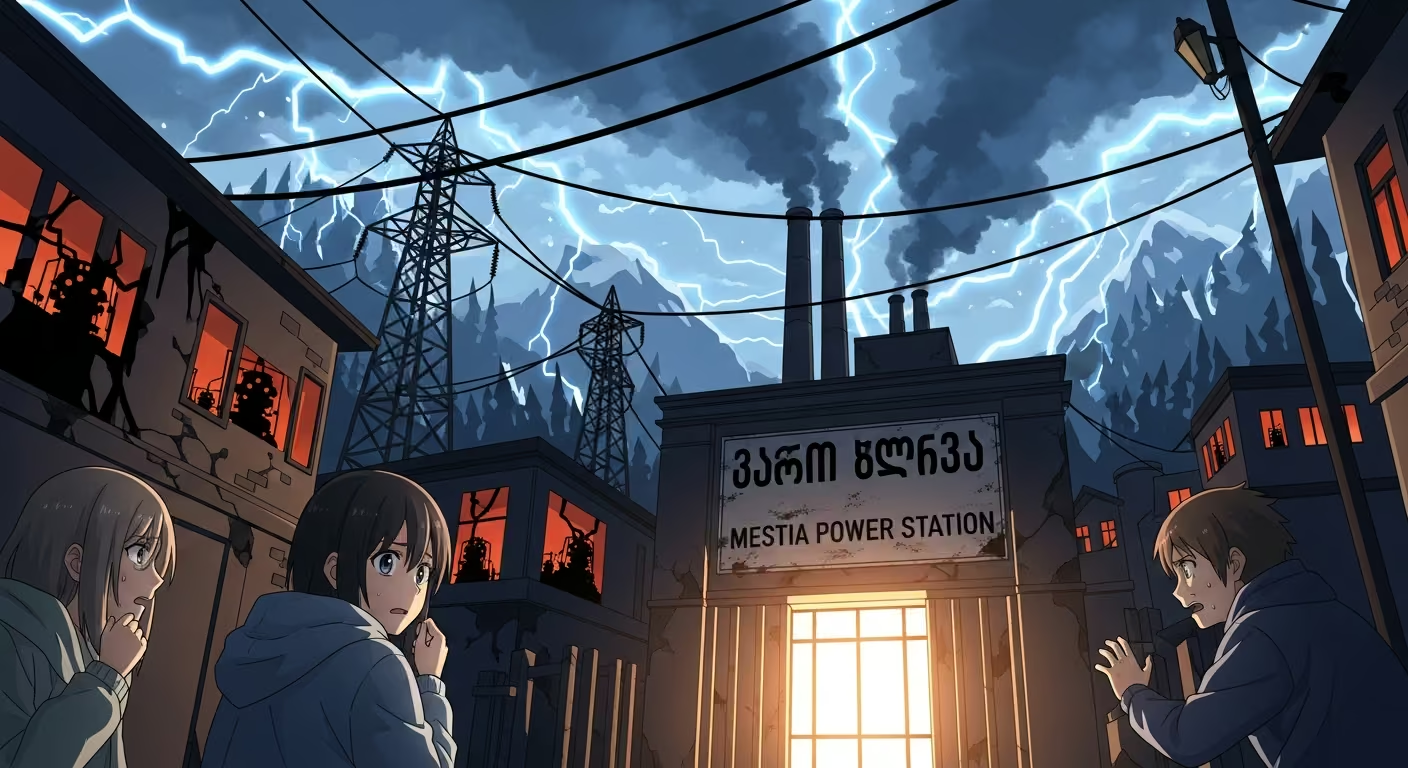
Illegal crypto mining operations in Mestia, Georgia, caused a surge in electricity demand, straining the local grid and prompting a government crackdown. Here’s what happened and why it matters.
Georgia’s Crypto Mining Crisis: What Actually Happened in Mestia?
The Crash Nobody Saw Coming
Mestia, a small town in Georgia’s Svaneti region known for medieval stone towers and alpine trekking, is not usually thought of as ground zero for an energy crisis. But that’s exactly what did happen. And it wasn’t the hard winter or tourism. It was illegal crypto mining, working undercover and sucking up enough juice to bring the local grid to its knees.
So let’s break it down: what went wrong, why it matters and how the government is finally getting on with it.
Mestia’s power grid was never meant to carry heavy industrial loads. It was built for homes, guesthouses, small businesses the usual suspects in a rural mountain town. Then, in the last year or so, electricity consumption increased by more than 300%. For reference, that isn’t just unusual; it’s the kind of spike you’d expect from a data center or a small factory, not a quiet tourist destination.
What was different? Crypto mining rigs gone wild. Mostly ASICs and high-end GPUs running 24/7, often without any authorization, or even basic safety precautions. Mining, however, is energy-agnostic, so miners will go where power is cheap and oversight is loose. Mestia became an accidental hotspot.
Put that in context with other rural counties in Georgia. Their power demand curves are stable, predictable and linked to real population and business activity. The Mestia curve? Absolutely detached from reality. The result: frequent brownouts, damaged transformers, and residents in the dark, as their electricity bills rose with system inefficiencies and stolen power.
The local tourism economy, already susceptible to the fickle nature of infrastructure, started to suffer. No business wants to have to explain to a guest why the lights are flickering or the Wi-Fi keeps dying.
The Economic Impact of Power Theft
Illegal mining is not a crime without victims. The direct financial impact on the municipality of Mestia is estimated at million dollars per year. That’s not an exaggeration. When there’s a lot of free electricity being stolen, and the utility has no way to recover those costs except by spreading them across paying customers, this is what happens.
And it’s here where it gets worse. Higher tariffs subsidise illegal miners from legitimate businesses – restaurants, hotels, shops. Households feel the same squeeze. At the same time, the grid’s constant strain increases maintenance costs and reduces the lifespan of critical infrastructure. And even beyond the direct utility impact, there’s a quieter but just as serious effect: capital flight. Why would you invest in a new hotel or a logistics depot if you do not have reliable power?” They won’t. The region misses out on both job creation and economic diversification opportunities, while a few illegal miners reap the difference between the free electricity and crypto market returns.
Related: Japan’s LDP Pushes Crypto ETFs and Yen Stablecoins in Major Regulatory Shift
When local governments are forced to divert money to emergency grid repairs, that money is coming from somewhere else-healthcare, road maintenance, public safety. That is the shadow tax of mining without regulation.
Georgia Strikes Back
The Georgian government didn’t do anything at the time, but the melt-down in Mestia made it necessary. Now we are seeing a coordinated response that includes law enforcement and infrastructure upgrades.
First, they’re putting in modern electricity meters in the affected villages. These are not the old analog meters that are easy to mess with. We are talking about digital meters with remote monitoring and tamper alerts.” The objective is straightforward: to make illicit usage visible in almost real time.
Second, authorities are working directly with energy regulators and law enforcement to identify sites of illegal mining. This means linking anomalous usage patterns of power with physical inspections. Miners would often tap directly into the lines, bypassing the meters entirely. That’s not a grey area. That’s stealing, plain and simple.
The government’s attitude is not anti crypto, but pragmatic. They’re not saying no to mining. They’re applying the same rules that apply to any other power intensive operation: pay for what you use, and don’t destabilize the grid for everyone else. That’s a position most serious miners who want stable, long-term operations can actually respect.
Related: Paxos Makes History as SEC Approves First Blockchain Clearing Agency
Georgia Mining Still Alive and Kicking
Let’s step back. Georgia has been a truly attractive destination for crypto mining for years. Why? Two main reasons: cheap hydroelectric power and historically light regulation. Thanks to many small and medium hydropower plants, electricity prices here are among the lowest in the world. And the government, especially pre-2020, was largely hands off, treating mining like any other industrial activity, not a financial product that required heavy oversight.
This open environment drew in foreign capital and local entrepreneurs. Legally, they paid their bills, contributed to the economy and large containerized mining farms popped up near power substations. It was a win-win for a while. But the Mestia situation is a warning. Sadly, the same cheap electricity that draws legitimate miners also draws the bad actors. Illegal operations that concentrate in weaker, rural grids accelerate their effects quickly.
The current crackdown by the government is targeting those bad actors – not the legal mining industry. The trick is not to over-correct. If the new rules make life difficult for compliant miners, some of them might move to other countries (Kazakhstan, Russia or even parts of Europe). That would be lost revenue and investment for Georgia.
But the status quo before the Mestia crisis wasn’t sustainable either. There are no trade-offs to being “crypto-friendly” such as power theft and grid instability. The real answer is more monitoring, more explicit enforcement and the understanding that cheap energy =/= free energy.
Final Word
Georgia isn’t abandoning crypto mining. But finally it is separating out legitimate industrial mining from outright theft. Mestia is a beautiful, remote town whose power grid was nearly destroyed by illegal rigs, and it’s a case study for other regions under similar pressure.
Georgia still offers competitive environment for compliant miners. And for those who don’t? The meters are on, the audits are happening, and the free ride is over. And that isn’t anti-crypto. That’s simple grid economics.