
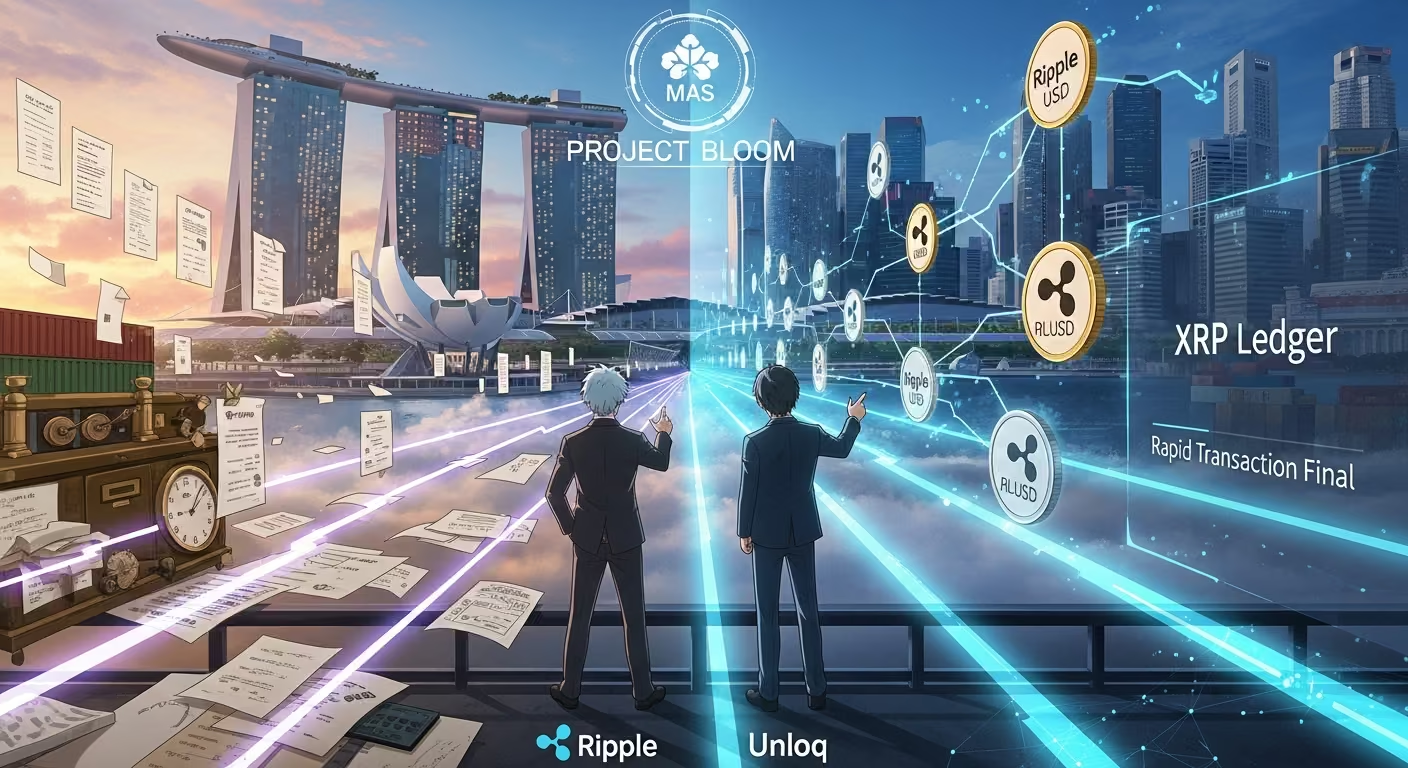
Ripple partners with MAS Project Bloom to test programmable cross-border settlements using XRP Ledger and RLUSD, targeting inefficiencies in global trade finance.
Ripple’s Strategic Entry into MAS Project Bloom
Ripple’s most recent move, joining MAS’s Project Bloom, is more than just another partnership announcement. It’s a clear sign that enterprise-grade blockchain is moving from pilot purgatory to real-world testing in trade finance. For those who are following this area, this is important: Bloom, which is led by the Monetary Authority of Singapore, is meant to fix the fragmentation and lack of transparency that have been problems in cross-border trade finance for decades.
Programmable Cross-Border Settlements on XRP Ledger
This is the technical truth about what they’re making. Ripple and its partner Unloq are testing programmable cross-border settlements. That’s a planned break from the usual letter-of-credit model, which still relies a lot on manual reconciliation and settlement cycles that last for several days.
By using the XRP Ledger as a base, they’re adding a settlement layer that can handle finality in seconds instead of days. And since the XRP Ledger was made for this exact purpose—low-cost, high-speed value transfer—it doesn’t have the throughput problems that many general-purpose blockchains do.
Related: Ripple’s $200,000 Bug Bounty Program for the XRP Ledger Lending Protocol
RLUSD: The Liquidity Game Changer
Ripple USD (RLUSD) is what makes this project more than just a technical demo. A regulated digital asset that is worth dollars changes the equation for liquidity. Currency mismatches, late payments, and the high cost of pre-funding cross-border transactions are all things that can make traditional trade finance fail.
RLUSD shortens that timeline in a big way. You want real-time settlement with built-in programmability. This means that payment conditions can be enforced at the protocol level instead of through legal or banking intermediaries after the transaction.
Unloq’s Execution Layer: Integrated Trade Finance Flows
It’s worth looking into what Unloq has to say here. Their supply-chain finance platform adds an execution layer that combines obligations, settlement triggers, and financing steps into a single programmable flow. That’s not just a small increase in efficiency; it changes the way counterparties interact in a big way.
You don’t have to deal with different workflows at banks, logistics companies, and buyers. Instead, you get a single view where settlement conditions happen automatically when certain conditions are met. For mid-sized businesses, which are often the ones that suffer the most from gaps in working capital, this is a big step forward in predictability.
Tokenization Meets Real-World Trade Finance
This is where theory and practice come together when it comes to tokenization. Ripple and Unloq are launching digital settlement tools that combine stablecoins with tokenized bank debts. The goal is simple: make it easier for businesses, especially smaller ones, to see settlement risk.
When things are set up the old-fashioned way, you often have to check the status of payments in more than one system. In this case, the XRP Ledger is the only place where you can find the truth, and settlement finality is built into the transaction lifecycle. That visibility leads to better managing of liquidity and less risk from the other party.
Singapore’s Regulatory Advantage
It’s not a coincidence that Singapore is involved. MAS has been methodical in its approach, creating regulatory sandboxes, improving digital asset frameworks, and supporting projects like Project Guardian and now Bloom.
They know that tokenization can only grow when there are clear rules and institutions are involved. Ripple’s role fits perfectly with that plan. You are seeing a jurisdiction that knows how important it is to make sure that policy matches technical ability, which is still rare around the world.
Related: Singapore and UAE Emerge as the World’s Most Crypto-Obsessed Nations
Impact on SMEs and Market Accessibility
People often forget to talk about how these changes will affect smaller market players in these talks. Trade finance has always been hard for small businesses to get because of high due diligence costs and collateral requirements.
This model makes it easier to get in by digitizing settlement instruments and relying less on middlemen. Faster settlement cycles also mean that capital isn’t tied up for no reason, which is very important for small and medium-sized businesses that don’t have a lot of money to work with.
Global Implications and Future Outlook
If this pilot works as planned, the effects will be felt beyond Singapore. This plan for regulated stablecoins, purpose-built ledgers, and programmable trade flows can be used anywhere. And since atomic settlement is already supported by the XRP Ledger, it is possible for it to work with other institutional netw. In short, this isn’t blockchain for the sake of blockchain. It’s a very focused effort to fix certain problems with trade finance using assets and infrastructure that were built for real-world use. If you want to see how tokenization is really used in regulated markets, this is one of the most important ones to keep an eye on.


One thought on “Ripple Joins MAS Project Bloom to Advance Programmable Trade Finance with XRP Ledger”