
A Practical Breakdown of the Two-Tier System in Crypto
Intro
Bitcoin started in 2009 with a simple idea: a decentralised ledger that miners would protect and keep track of who owns what. It was pretty, but it was also limited. As the ecosystem grew, it became clear that one chain couldn’t do everything well. If you wanted both security and speed, as well as decentralisation and advanced features, you needed more than one chain.
The two-tier system comes in. Dash figured this out years ago, so it’s not a new idea. However, it has become the main part of a surprising number of projects that want to solve that problem. This is how it works, why it matters, and what it doesn’t do well.
What We Really Mean by “Two-Tier”
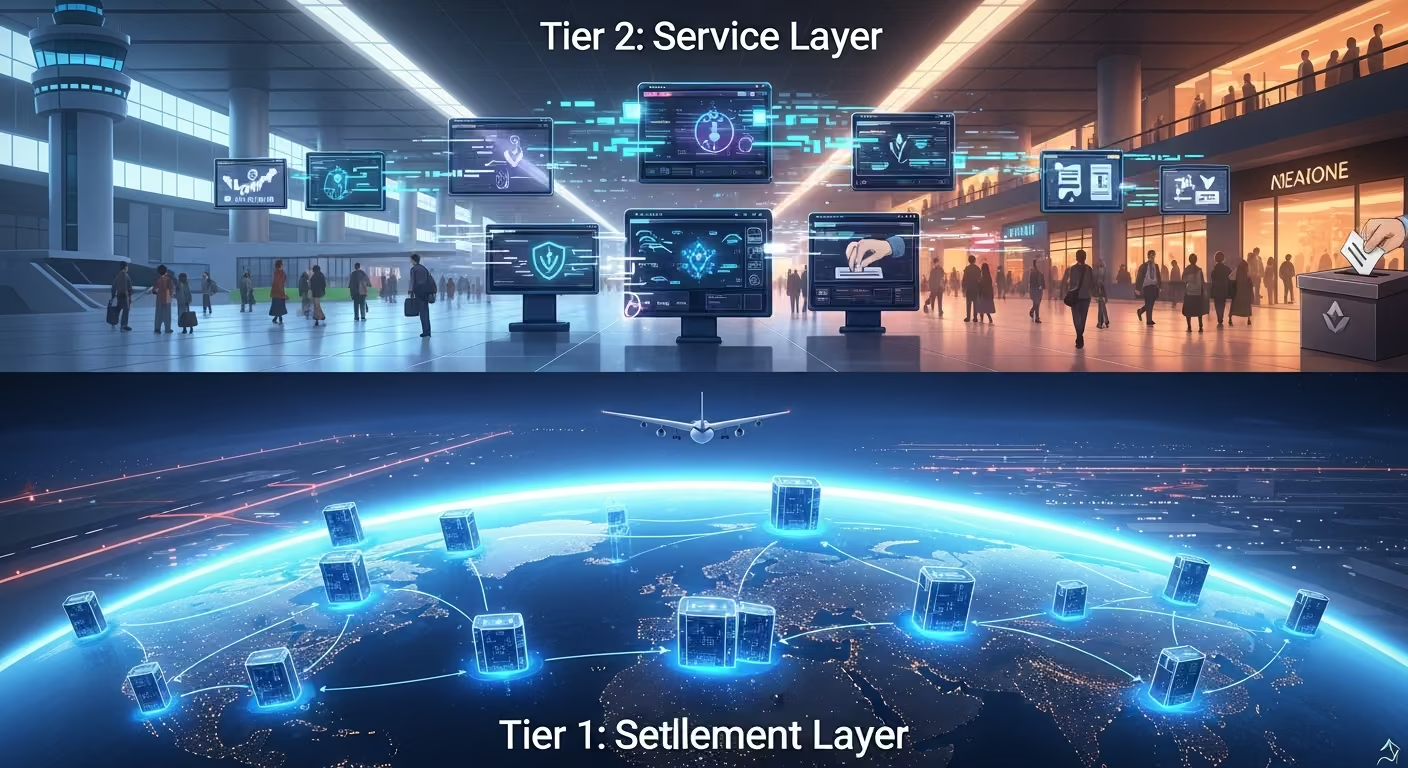
If you take away the jargon, a two-tier system is just a clear division of work. The base layer takes care of the hard things like final settlement, security, and consensus. The second layer takes care of everything else, like instant payments, privacy features, governance votes, and anything else that would slow down the main chain if you tried to do it there.
Imagine it as an airport. The runways and control tower (Tier 1) are where planes take off and land. This is very important and can’t be changed, but you don’t spend most of your time there. The terminals and stores (Tier 2) are where passengers actually have their experiences. They both need to work, but for different reasons.
Related: Getting to Know Virtual Asset Service Providers (VASPs)
How the Layers Work in Real Life
The Settlement Layer is Tier 1
This is the base. Tier 1 nodes do the boring but important work of validating transactions, reaching consensus, and adding blocks to the chain. This is true whether the miners are in a Proof of Work system or the validators are in a Proof of Stake system. It is their job to keep the ledger accurate and unchangeable.
These nodes are spread out all over the world, which makes the network safe. The more nodes there are, the harder it is to attack. That’s the trade-off: Tier 1 is slow and methodical on purpose because trust is more important than speed.
Tier 2: The Layer of Services
Things start to get interesting in Tier 2. These are specialised nodes, often called masternodes or supernodes, that usually require operators to put up a lot of the network’s native tokens as collateral. That collateral isn’t just for show; it makes people want to do the right thing and punishes those who don’t.
These nodes make things possible that wouldn’t be possible on Layer 1 once they’re up and running. Transactions that happen right away and settle in seconds instead of minutes. Privacy features that hide the details of transactions. Governance systems in which node operators vote on changes to the protocol or how to spend money from the treasury. The base layer stays simple, but the second layer gets fancy.
The Projects That Made This Happen
Dash
Dash didn’t come up with the two-tier model, but it did make it more popular. Their setup is simple: miners keep the network safe, and masternodes (which need 1,000 DASH as collateral) provide InstantSend, PrivateSend, and voting on governance issues. It has been running since 2014, which is a long time in the world of cryptocurrency, and it has held up very well. Many newer projects have copied the masternode model, which lets Dash fund itself through block rewards.
Firo (formerly known as Zcoin)
Firo went down a similar path. Masternodes let you use privacy features and make decisions about how the system works. Miners take care of the base layer. The collateral requirement makes sure that the people who run these nodes have something to lose, which should keep them honest.
Horizen
Horizen took the model a step further by adding two levels of nodes: secure nodes, which are the first level, and super nodes, which offer sidechain support and other advanced services. This is a more detailed approach that takes into account that not every node operator needs the same tools.
Bitcoin and Lightning
Bitcoin purists might not like calling the Lightning Network a “two-tier system,” but that’s exactly what it is in terms of how it works. The base chain takes care of final settlement, while Lightning takes care of quick, low-value transactions that don’t happen on the chain. The architecture is different, and it’s not based on masternodes, but the idea of offloading certain tasks to a second layer is the same.
Why Build This Way?
The two-tier model works to solve real problems.
The most obvious one is scalability. As more people use the network, it slows down because every node has to process every transaction. Tier 2 nodes can handle a lot of traffic or complicated tasks without slowing down the base layer.
Another is feature bloat. Adding privacy, smart contracts, and governance directly to Layer 1 makes the codebase huge and makes it easier for attackers to get in. It’s better to keep the core simple and add features through specialised nodes.
When you have a clear group of stakeholders who have a stake in the game, governance becomes easier. Masternode operators tend to vote carefully on proposals because they have put a lot of money into the system. It’s not a perfect democracy, but it works better than the mess of governing through forums.
Related: Cross-Chain Bridges and Wrapped Assets: Connecting the Blockchain Ecosystem
The Bad Things That People Don’t Talk About Enough
Even though it’s beautiful, the two-tier model has some real problems.
The biggest risk is centralisation. If you need to spend six figures to run a Tier 2 node, you’re effectively keeping people from being able to use advanced features and participate in governance. Most people can’t afford Dash’s 1,000 DASH requirement. That gives power to a few.
Another is how complicated it is. Every extra layer gives bugs another place to hide and makes infrastructure more likely to break. The Lightning Network has had a hard time with usability and reliability, despite all the promise it holds.
And then there’s the question of collateral. Locking up funds for node operators makes sure they are committed, but it also makes a group of rich people who may not have the same interests as smaller holders. When masternodes vote on how to spend treasury money, they’re voting with their wallets, and those wallets are much bigger than the average user’s.
Where This Goes Next
The two-tier model isn’t going away, but it is changing. Newer projects are trying out different incentive structures, lower barriers to entry, and more granular tiers. We’re also seeing hybrid approaches that use masternodes along with other ways to make things bigger, like rollups or sidechains.
It’s clear that the one-chain-does-all model has some problems. As cryptocurrencies become more popular, the networks that do well will be the ones that can find a way to divide up work without losing their decentralised nature. Two-tier systems aren’t the only answer, but they’ve been shown to work, and they’ll probably be part of the conversation for a long time.