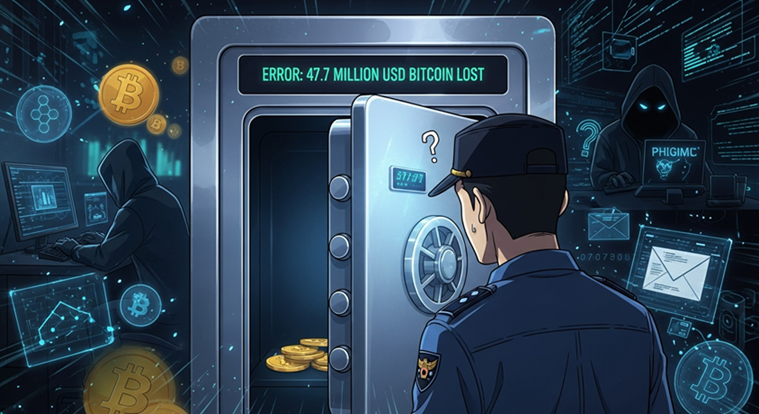

Hong Kong’s Securities and Futures Commission introduces mandatory crypto login security rules, replacing legacy OTPs with passkeys and hardware security keys to strengthen investor protection.
Hong Kong’s New Crypto Login Rules: A Much Needed Evolution in Digital Asset Security
If you have been following the regulatory landscape in Asia, you will be aware that Hong Kong has never been one to shy away from taking a hard line on financial security. But this latest move is more than just business as usual rule-making. It’s a direct response to the dark underbelly of our digital gold rush. The Securities and Futures Commission (SFC) has released a new set of mandatory cybersecurity rules, focused on how customers access their crypto trading accounts. And frankly it’s about time.
Let me be clear, this is not some tick box bureaucratic exercise. The SFC is effectively waving goodbye to the era of lax login security for digital asset exchanges. We’ve all seen the headlines $3.2 billion lost to crypto fraud and phishing worldwide in recent years. In Hong Kong alone, sophisticated phishing rings have stripped investors bare, with one operation in 2021 draining more than $100 million from compromised wallets. The handwriting has been on the wall for some time and the regulator has at last decided to act with zeal.
The Tech Makeover: Farewell OTP, Welcome Passkeys
The biggest change in these new requirements is the complete removal of legacy one-time passwords sent via SMS, email or mobile authenticator applications. These methods were the foundation of “basic” 2FA for years, but have become increasingly vulnerable. SIM-swapping attacks, e-mail compromise, and even sophisticated man-in-the-middle phishing tools have made them far less secure than the typical investor thinks.
The SFC is now requiring a shift to more resilient mechanisms for authentication. We’re talking about passkeys, cryptographic key pairs that replace passwords entirely, and hardware security keys like YubiKeys. This is a fundamental change from knowledge-based authentication (something you know) to possession-based authentication (something you have) in combination with biometrics or local device verification.
The good thing about passkeys is they can’t be phished. Their domain-binding and public-key cryptography means that even if a user is tricked into visiting a fake login page, the passkey simply won’t work. Similarly, hardware security keys add a physical barrier that’s almost impossible to breach remotely. To enable the transition, the SFC has put in place a clear, phased implementation schedule, giving platforms the runway they need to incorporate these technologies without disrupting operations. This isn’t a “stop everything and fix it by Monday” order. This is a strategic shift towards a more secure infrastructure.
The Threat Environment and What It Means to Investors
To understand the seriousness of this regulatory push, you have to look at the evolving nature of the threats we’re facing. Phishing attacks aren’t just becoming more frequent, they’re becoming more sophisticated. We’re moving from bad grammar in emails from Nigerian princes, to highly organized attacks that mimic real exchange interfaces in real-time.
Dr. Ye Zhiheng of the SFC, a key player in this regulatory shift, has stressed the need for a multi-layered defense-in-depth-approach. The logic is straightforward: it is a fool’s errand to rely on a single security layer, such as a password. Cybercrime gangs are leveraging AI to create convincing spear-phishing attacks, and automation to scan for vulnerabilities. The SFC knows that to keep ahead you have to build a fortress, not just a locked door.
The new rules are more than just login protocols, then. Platforms now need to implement sophisticated threat detection systems, carry out regular and rigorous security audits, and most importantly, craft detailed incident response plans. The goal is to make sure that when, not if, an attempt occurs, the platform will be able to detect, contain and protect user data before any real damage is done.
If you’re a casual investor using platforms like OSL or HashKey, this overhaul of rules means a real change in the way you manage your digital assets. You won’t just log in with a password and an SMS code anymore.
“There will be a push for mandatory registration of devices. This “trusted device” method makes sure that even if someone does steal your login credentials, they won’t be able to access your account from any other computer unless they go to some extra lengths. Hardware keys will also likely be a standard recommendation (or even requirement) for high-value accounts.
Some investors’ first response might be to groan about “added friction”. But, as someone who has seen this industry go from the fringe to the mainstream, I can tell you that this friction is a feature, not a bug. It forces a security-first mentality. The temporary hassle of plugging in a USB key is a small price to pay for the stomach-churning realisation that your life savings have been drained because you clicked a link you shouldn’t have clicked.
In the long term, these regulations bode well for the broader ecosystem. If anything, they will likely weed out the retail investors who are not serious about security and bring in the institutional capital that wants clear regulation and strong protection.
The Future of Cryptocurrency Security
The SFC’s move is likely to be a blueprint for other jurisdictions looking forward. With digital assets maturing, the dial is moving away from simple licensing towards operational resilience. The cowboy days of crypto are nearly done, the era of institutional-grade security is starting.
Related: Binance’s EU MiCA License Application Could Reshape Crypto Regulation in Europe
“We may see quicker adoption of biometric verification, perhaps behavioral biometrics that track the way you type or move your mouse, as an extra layer of continual authentication. Hardware security will go mainstream and the industry standard will be “zero-trust” architecture, which means the system never trusts and always verifies.
Hong Kong ultimately demonstrates that strong regulation doesn’t have to stifle innovation, but can be the foundation of a sustainable, trusted digital economy. In so doing, the SFC is protecting investors while also ensuring the long-term viability of the crypto sector in the region. And for those of us who have been fighting for these standards for years, it feels like a big step towards the bright and secure future this technology deserves.
Related: Revolut Gets MiCA Approval in Cyprus