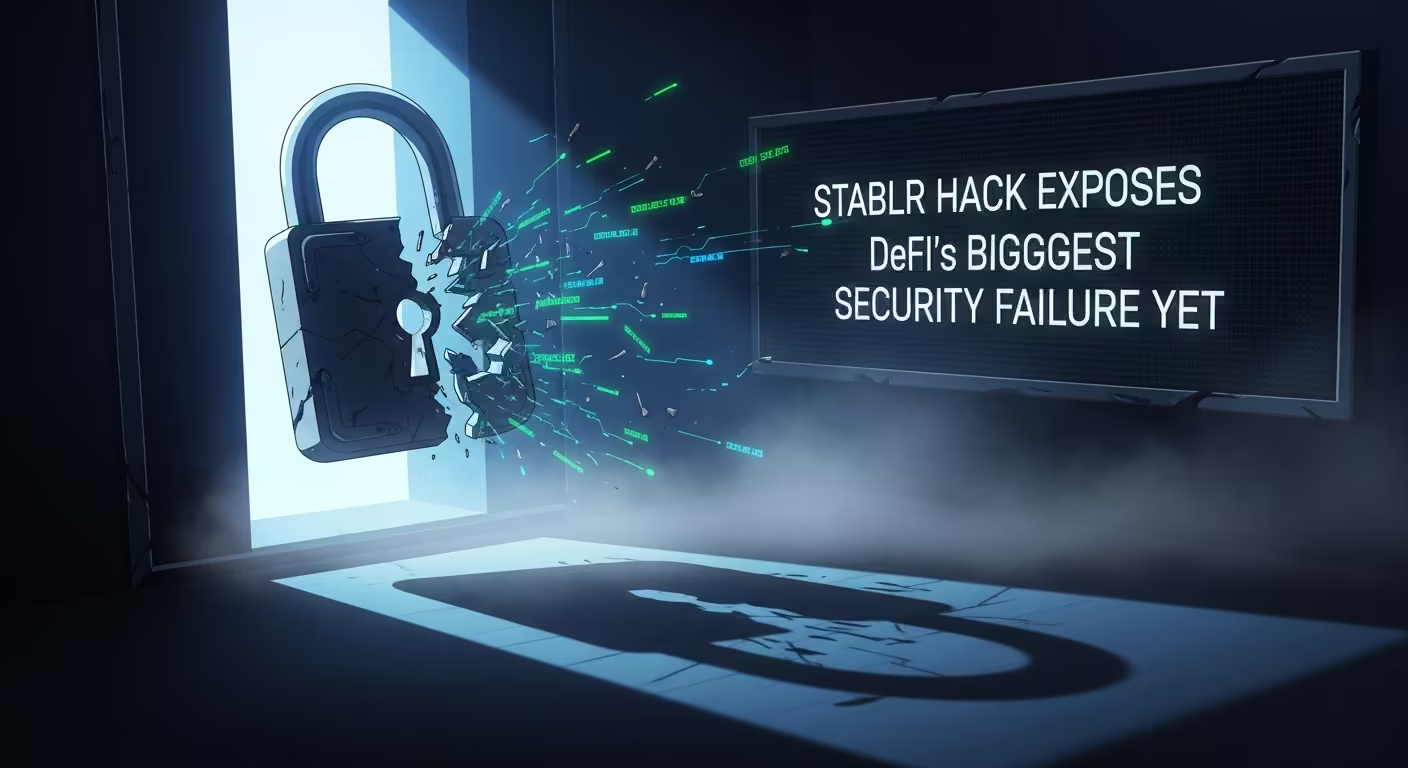
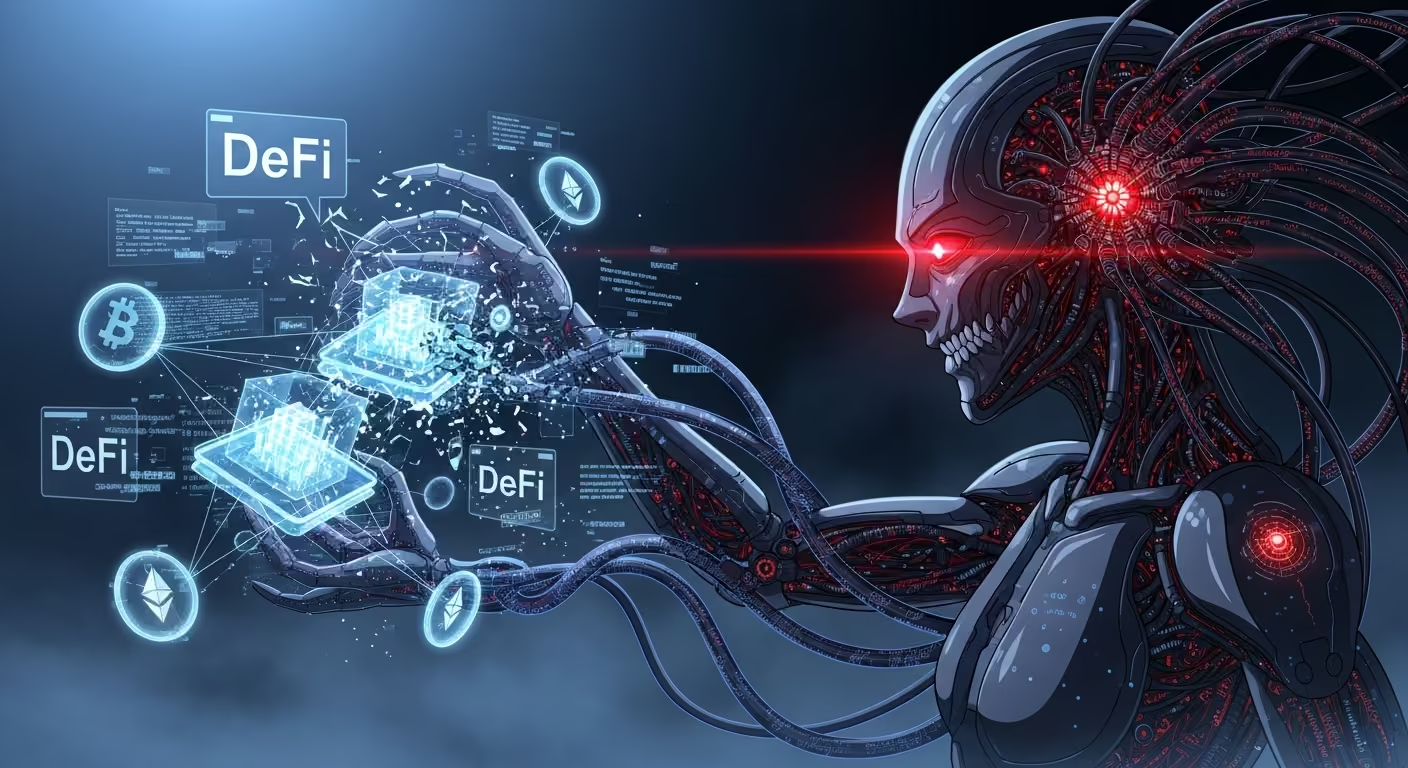
AI-powered attacks are reshaping DeFi security. Experts from OpenZeppelin, SlowMist, and Cyvers warn that smart contracts, phishing, and key management face growing risks in the age of artificial intelligence.
Is AI Making DeFi Inherently Unsafe? The Crypto Security Debate Is Heating Up
AI-Powered Exploits Are Changing the Rules of DeFi Security
Let’s get to the point. The question isn’t whether DeFi has security issues, we’ve known that for years. The real question is whether AI is making those problems inherently worse. And if you ask around, the answer is from “maybe, but let’s keep calm” to “we are already in dangerous territory”. OpenZeppelin founder Manuel Aráoz doesn’t mince words. His assertion that DeFi overall is becoming inherently unsafe has fueled heated debates across the cryptosphere. But from where this solicitude? In a nutshell: AI coders. These tools are getting scarily good at finding vulnerabilities in smart contracts and that changes everything.”
Here’s the thing. DeFi was created to offer transparency and access without the need for permission. Those aren’t flaws, they’re characteristics. But those same features become liabilities when bad actors can use AI to scour every line of public code, searching for the tiniest oversight.
Smart contracts are notoriously difficult to secure and increasingly are “sitting ducks,” Aráoz argues. Not because they have gotten worse, but because the tools that are attacking them have gotten exponentially better.
It’s the speed that’s the worrisome bit. AI doesn’t tire. AI doesn’t miss edge cases after 12 hours of auditing. And AI learns and gets better with every exploit it reviews. So yes, Aráoz thinks we are heading for an explosion in security breaches, not because developers are careless, but because the bar for finding a needle in a haystack just crashed through the floor.
The consequences? Teams are running. Investors are jittery. And the wider blockchain security community is being forced to ask uncomfortable questions about how much trust we should place in protocols that were never designed to withstand AI-powered adversaries.
The “Dual Threat” Facing DeFi Platforms
Now let’s bring in someone who watches these attacks daily. SlowMist’s Yu Xian has been warning of what he calls a “dual threat.”
The first is black-hat hackers weaponizing AI to automate discovery of vulnerabilities at scale. We’re talking about ML models that feed on smart contract bytecode, detect risky patterns, and surface potential exploits faster than any human ever could. This is not science fiction stuff. This is happening now.
Second, and this one is often ignored, AI supercharges social engineering. Imagine deepfake audio, hyper-personalized phishing emails, or even fake Slack messages written in the style of a project lead.
“These are no longer niche threats. I’ve seen teams literally drained because a developer got a call that sounded exactly like the CEO asking for emergency access. That’s the psychological part of the equation, and AI makes it terrifyingly effective.”
The implications are pretty dire. One successful attack can kill millions and destroy user confidence for years to come. And because DeFi is interconnected, a single compromised protocol can set off a domino effect across lending platforms, bridges and liquidity pools. That’s why analysts like Yu Xian keep recommending layered defense: real-time threat detection, behavioral analytics, and ongoing user education beyond “don’t click suspicious links.”
You can’t just audit once a year and say, ‘That’s it.’ The threat landscape is moving too fast for that.
Related: Kraken Layoffs Show How AI Is Reshaping the Crypto Industry
Why Some Experts Think The Panic May Be Overblown
But before we all rush for the exit, let’s hear the counter-argument.
One of the more sober voices here has been Meir Dolev of Cyvers, who makes a good point: the direct link between AI and big DeFi exploits is still more theoretical than proven. So yes, AI can find bugs. But so far most catastrophic hacks have been perpetrated with the usual suspects—faulty smart contract logic, stolen admin keys, or plain human error.
Dolev’s point isn’t that we should ignore AI. The point is, we must not let it distract us from the basics. You don’t need an AI to break a poorly designed staking contract. A leaked private key doesn’t care how clever the attacker is. So if we’re so worried about AI as the boogeyman, we might be missing the real vulnerabilities in front of our faces. He also acknowledges that AI presents new attack vectors, especially when projects use it recklessly. An AI oracle built on untested sources? A vulnerable machine learning model to bad input poisoning? These are real dangers. But they’re not reasons to give up on DeFi. There’s reasons to make them better.
The bottom line?
“Let’s not make this an AI vs DeFi panic. The real work is in improving code quality, hardening key management, and designing governance systems that don’t buckle under pressure, no matter who or what is probing them.”
What the Industry Must Do Next
What do we do now?
If periodic audits were sufficient, we wouldn’t be having this conversation. They are not. We need security that is real-time and proactive. The first is that AI-assisted code reviews are now mandatory. Static analysis during development (not just once, but constantly) can help catch things early. Some teams are already using AI to model how a contract would react to thousands of attack scenarios. That’s the kind of feedback loop that really moves the needle.
- Real-time transaction simulation.
- You sandbox the outcome before a high-value transaction executes. Does it try to suck a pool dry? Manipulate a price feed? Such simulations can prevent attacks before they happen. I’d say this should be the norm for every major DeFi protocol.
Third, management of the key needs a serious upgrade. Multi-sig is baseline now, but we’re seeing more projects move towards protection at the hardware level, distributed signing ceremonies, and even time-locked recovery mechanisms. And yes, user education matters – not the boring kind, but practical guides on how to use hardware wallets, recognize phishing attempts and verify contract addresses. Not even the most secure code in the world can save you if a user signs a malicious transaction thinking it is a legitimate airdrop. Look, nothing about this is easy. The teams that view security as a continuous process, rather than a one-off audit, will be the ones still standing five years from now.
Artificial intelligence is changing the game, but it’s not checkmate. We need to stop playing defense and start building on the assumption that someone or something is always watching. It means being open to new tools, being suspicious of grandiose claims, and never accepting that yesterday’s best practices are sufficient for tomorrow’s attacks. DeFi can survive this, but only if we drop the ego, share intelligence across teams, and invest in security like the lifeline it actually is.
The discussion isn’t really about DeFi becoming unsafe. The question is whether we are willing to do the hard work to keep it safe. “I think we are. The clock is ticking though.”