Discover how Pudgy Penguins evolved from Ethereum NFTs into a mainstream retail brand through Walmart plush toys, Target trading cards, gaming, and community-driven licensing.
The Genesis: Not Just JPGs
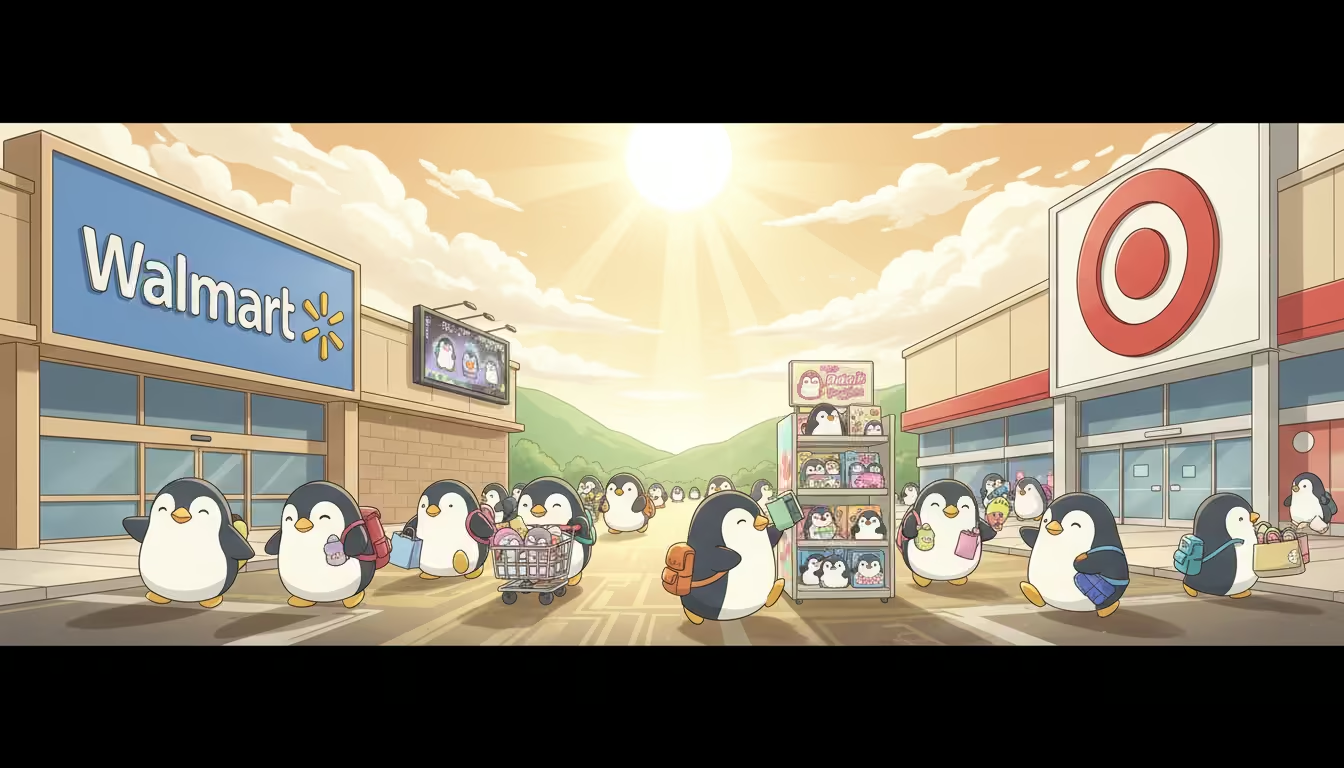
Few could have foreseen that these pudgy, cartoonish avatars would turn into a bona fide retail brand when Pudgy Penguins hatched on Ethereum in 2021. But here we are, with a bunch of 8,888 algorithmically generated nfts not only surviving the crypto winter but thriving, with plush toys at walmart, trading cards at target and video games in development. It’s not just a feel-good story about digital art in the physical world. It’s a masterclass in brand extension, community monetization, and the strategic blurring of virtual and tangible commerce.
The original Pudgy Penguins drop was classic NFT stuff: bright artwork, a clear rarity structure and an immediate sense of tribal belonging. But unlike so many other profile-picture projects that faded into obscurity, the penguins had something stickier. A real community of enthusiasts, and a look that translated easily off the screen. The characters were not edgy or abstract; they were friendly, fanciful and instantly recognizable. That decision to design, whether by design or by accident, was the genesis of all that followed.
The early path of the project was not without turbulence. Ownership disputes and leadership changes threatened to derail momentum, but the community rallied. When Luca Netz took over in 2022 it was obvious what the pivot was: this was not going to be just another NFT project hoping for a secondary-market pump. The new leadership knew that in the long term, value wasn’t just about digital scarcity but real-world utility. That realization paved the way for one of the most ambitious crossovers the NFT space has ever seen.
Breaking the Digital-Physical Divide
The move from Ethereum-based collectibles to physical merchandise was not a side project done on the side, but a calculated, multi-pronged assault on mainstream retail. The first big salvo came in the form of Series 3 trading cards at Target. For a brand born on the blockchain, getting shelf space at one of America’s biggest big box retailers was more than a win. It was a signal to the entire industry that NFTs could spawn tangible consumer products with real demand.
But trading cards were just the beginning. The Walmart launch of the plush toy took it to the next level. For early adopters, it was surreal to walk into a Walmart and see a Pudgy Penguin stuffed animal that was soft, huggable and had the same characteristics as its digital counterpart. More importantly, it brought the brand to a demographic that has never touched MetaMask or understood gas fees. Parents buying plushies for their kids didn’t care about blockchain, they were responding to cute characters.” That’s the sort of mainstream osmosis only pure-play digital projects can dream of.
Here, a special mention should be made of the licensing model. In traditional IP licensing, the brand owner gets the majority of the upside, but Pudgy Penguins structured their deals to directly benefit the NFT holders. Buy a Pudgy Penguin plushie and some of the licensing revenue goes back to the underlying NFT owner. This isn’t charity, it’s a smart incentive alignment that turns passive holders into active brand ambassadors. The more successful the merchandise, the more valuable the NFT and the more engaged the community gets in promoting the products. It’s a virtuous cycle, and one that traditional IP holders are now looking at very closely.
If retail was the first frontier, gaming is the second frontier. Pudgy Penguins has been quietly building a portfolio of interactive titles like ‘Pengu Clash,’ ‘Pudgy Party’ and the forthcoming ‘Pudgy World’ that extend the brand’s reach into one of the most lucrative entertainment sectors on the planet. Pengu Clash has a competitive multiplayer mode, where players battle each other in fast-paced scenarios that really play up the fun rivalry of the penguin world. Pudgy Party, conversely, emphasizes social minigames that prioritize cooperative fun over direct head-to-head competition. Both titles have a dual function: they immediately engage players with the characters, and they collect useful user data for future product development.
But “Pudgy World” is the big wildcard. This browser-based experience aims to create a huge virtual space where players explore and interact, and maybe even collect NFT items in the game itself. Done right, it could blur the line between gaming and digital ownership in ways that early blockchain games only hinted at. The challenge, of course, is providing fun first, with blockchain mechanics secondary to gameplay. Pudgy Penguins seems to understand that. Their gaming strategy is built on accessibility over technical complexity, which is the right approach for mass adoption.
Implications for the NFT Ecosystem
Related: The Closing of Nifty Gateway: A Big Change in the NFT World
Here are some key takeaways for the broader digital-asset industry from Pudgy Penguins’ retail success. Brand identity is more important than the technological novelty. First. The penguins didn’t fail because they had a novel smart contract, but because their characters resonated across generations. Second, community ownership can be a competitive advantage, if it’s done right. Licensing is a revenue model that turns holders into stakeholders, not just speculators. Third, diversification across physical and digital touchpoints builds resilience. Merchandise sales and gaming revenue provide a cushion when NFT prices fluctuate, and they will.
That said, there is no lack of risk ahead. Retail partnerships require consistent inventory management, quality control and marketing support, capabilities that NFT native teams often do not have. The art of scaling production while keeping brand integrity is a tricky juggling act. The gaming space is just as unforgiving, failed game launches can destroy reputations faster than almost anything else. Pudgy Penguins will have to execute with surgical precision to avoid the pitfalls that have claimed many an ambitious cross media project.
The Retail Journey and Beyond
The Target partnership likely won’t be the last large retail transaction. Its characters have proven to be relevant across age groups and shopping occasions, opening the door to everything from apparel to home goods to back-to-school supplies. Themed merchandise drops, seasonal collections and collaborations with other intellectual properties could help cement Pudgy Penguins’ status in the consumer-products space.
Plus, there’s the question of expansion outside the U.S. Walmart and Target are US-centric. European and Asian retailers are untapped opportunities. The NFT community is worldwide so a strategic roll out location wise could add a lot to merchandise sales and brand awareness.
Most interesting perhaps is the success of Pudgy Penguins that bucks the dominant narrative that NFTs are purely speculative instruments. The project bridges to physical retail to demonstrate that digital ownership can have real-world economic consequences, not only for collectors but also for manufacturers, retailers, and licensors. This is not about replacing traditional commerce but about adding new forms of value creation.
Related: Walmart-Backed OnePay Expands Crypto Offering With SUI, POL, and ARB
Final Thought
Pudgy Penguins have achieved something rare in the crypto space: they’ve transformed a digital asset into a multi-channel lifestyle brand without losing their essence. The plush toys, trading cards, and video games aren’t gimmicks; they are logical extensions of a property that was always more than just pixels. The brand’s appeal is undeniable, whether you’re a seasoned NFT collector or a parent buying a child a stuffed penguin.
The real work is ahead. Can Pudgy Penguins sustain the momentum as retail partnerships grow and gaming titles launch? As the brand inevitably goes more corporate, will the community stay engaged? These are open problems. But for now at least, the penguins have shown that the gap between blockchain and Main Street is smaller than many thought and that digital collectibles can carve out a permanent space in the physical world with the right strategy. That’s a lesson worth learning, regardless of your take on NFTs.