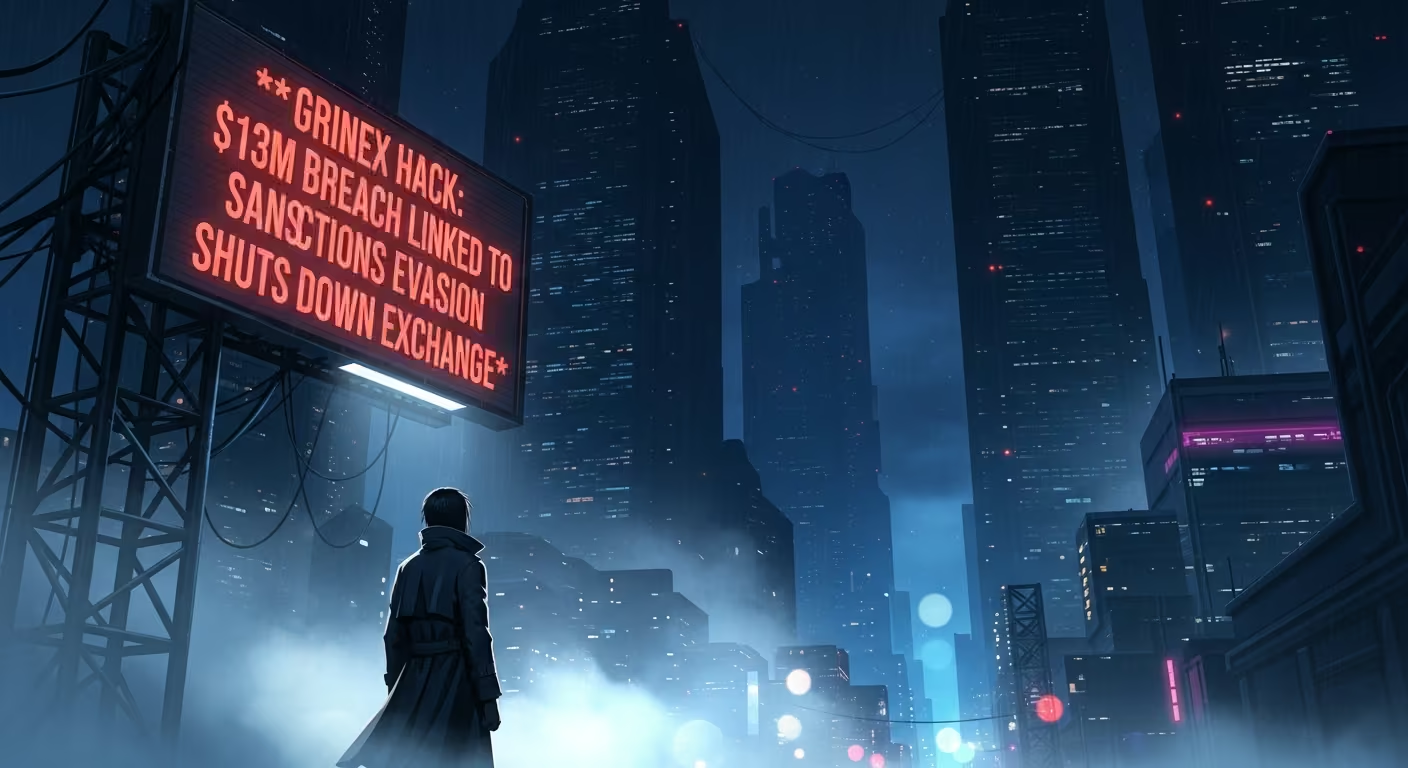
Grinex crypto exchange halts operations after a $13 million hack tied to sanctions evasion concerns, raising serious security and regulatory risks in the crypto industry.
Grinex Closes Down After $13 Million Hack Linked to Evasion of Sanctions
What Went Wrong at Grinex
The recent breach at Grinex, a Russian crypto exchange that hasn’t been in the news much lately, is a stark reminder of how vulnerable the industry still is, especially for platforms that operate in areas that are legally grey or politically tense. It looks like a very well-planned cyberattack hit the exchange, costing it $13 million. That’s a lot of money, even for crypto.
It’s not just the amount of money that’s worrying; it’s the level of sophistication. Grinex’s team has done some early research and found that the attackers used advanced methods, probably taking advantage of both software flaws and network security holes. Once they got in, they could get into customer wallets and other private information without permission. Anyone who has ever used a centralised exchange should be worried about that second part. No one is safe if something like Grinex can get this bad.
Grinex, on the other hand, shut down its operations—temporarily, they say—to keep things safe and stop more damage from happening. It’s never easy to make that kind of choice; it shows a lack of confidence. They say they want to rebuild trust and put in place stronger security measures, but after a breach of this size, words are cheap. Users are in pain right now because their money is frozen and they don’t know what’s going to happen next. For the market as a whole, this is another blow to trust in centralised custody.
But this is where things get even worse. More and more evidence suggests that this attack is linked to ways of getting around sanctions. And that changes the topic from “bad security” to “risk at the state level.”
Related: South Korea Shuts Down a $100 Million Illegal Network That Sends Crypto Money
Why Grinex Was Important in the First Place
To get a better idea of the real effect, you need to look at Grinex’s part in the crypto world after the sanctions. After the U.S. and U.K. put heavy sanctions on Garantex, there was a gap for Russian-speaking users who still wanted to move money in and out of crypto without setting off international alarms. Grinex jumped right into that space.
What set them apart? Two things: they support the ruble and use the A7A5 stablecoin. Major Western exchanges don’t usually have ruble on-ramps, which gave Grinex a built-in user base. At the same time, A7A5 was a stable alternative to the usual volatility of crypto, which was great for people who wanted to keep their money safe without drawing attention to themselves by using more popular stablecoins like USDT or USDC.
So, Grinex wasn’t just another exchange. It was a key point in a network that was set up to keep Russian money moving even with sanctions. Whether they meant to do that or not, the result was the same: they became a financial lifeline for users who didn’t have many other options. That also made them a good target for hackers and regulators.
Sanctions, Close Watch, and a Messy Example
Let’s be clear: Grinex didn’t just appear out of nowhere. For a while now, the U.S. and U.K. have been going around exchanges like this, especially ones that are thought to be helping Russia’s war efforts. It’s not just a theory; if you can move rubles into crypto and then into international markets, you’ve just made a way to get around sanctions. And that’s exactly what regulators think Grinex made possible.
The timeline is important. As the conflict in Ukraine got worse, Western governments began to name and shame exchanges that seemed to be helping sanctioned groups make deals. That watchlist had Grinex on it. When you think about the history of its predecessor, Garantex, which was banned for allegedly breaking sanctions and laundering money, the pattern becomes impossible to ignore.
Because of that history, Grinex is being closely watched. Every transaction, every connection to a wallet, and every relationship with a partner is looked at closely. The pressure made them talk a lot about being open and following the rules. But talking won’t stop a hack that costs $13 million. And it doesn’t stop regulators from coming around.
Now that the breach is public and operations are on hold, the damage to the company’s reputation might be the worst part. Who will trust them with money even if they start over?
Related: What You Need to Know About South Korea’s Latest Crackdown on Cryptocurrency Exchanges
What Happens Next: Rules and Reality Checks
This event isn’t happening in a vacuum. The European Union is already talking about making it harder to do crypto transactions with Russian businesses. Think about bans on transactions, forced KYC upgrades, and keeping an eye on cross-border flows in real time. If those rules pass, exchanges like Grinex and any other platform that deals with a lot of Russian money will have a hard time following them.
In practice, this means:
- Exchanges will have to spend a lot of money on tools to keep an eye on things. No more “we’ll look at it later.” Real-time checks of wallet addresses, sanctions lists, and transaction patterns will become the norm.
- There will be more cooperation between regulators. You can expect exchanges and organisations like OFAC or the UK’s OFSI to share more information. That’s a double-edged sword: more surveillance, but also better enforcement.
- People will act differently. If you’re a real user on a Russian-friendly exchange, you might not be able to get in or be severely limited. That makes people want to use DeFi, which has its own risks and problems with the law.
The Grinex hack is a wake-up call for the whole industry. Cybersecurity and following the rules for sanctions are no longer two separate areas of risk. They’re in the same bucket. A breach doesn’t just leak money; it also leaks proof of who is trading with whom, which can lead to legal action.
The crypto market has always been proud of how strong it is. But being strong doesn’t mean anything if the platforms underneath are both unsafe and open to legal action. Grinex might make it through this. But Garantex didn’t. No matter what, the next year is going to be full of awkward talks about security, sovereignty, and who really controls the money.
And for anyone who is paying attention, that’s exactly what we should be talking about.