Tokenization is transforming finance by enabling fractional ownership, atomic settlement, and interoperability while raising risks around volatility and regulation.
Tokenization and What It Really Changes in Finance
Let’s Start with What Tokenization Actually Is
Tokenization is simple: you take the rights to an asset and turn them into a digital token that lives on a blockchain or distributed ledger. Over the past few years, this has gone from a small-scale experiment to a real force in modern finance. Why? Because our existing market infrastructure is struggling to keep up with technology, and tokenization offers a way forward. By putting assets and liabilities on programmable digital ledgers, you can speed up transactions and cut out a lot of unnecessary complexity.
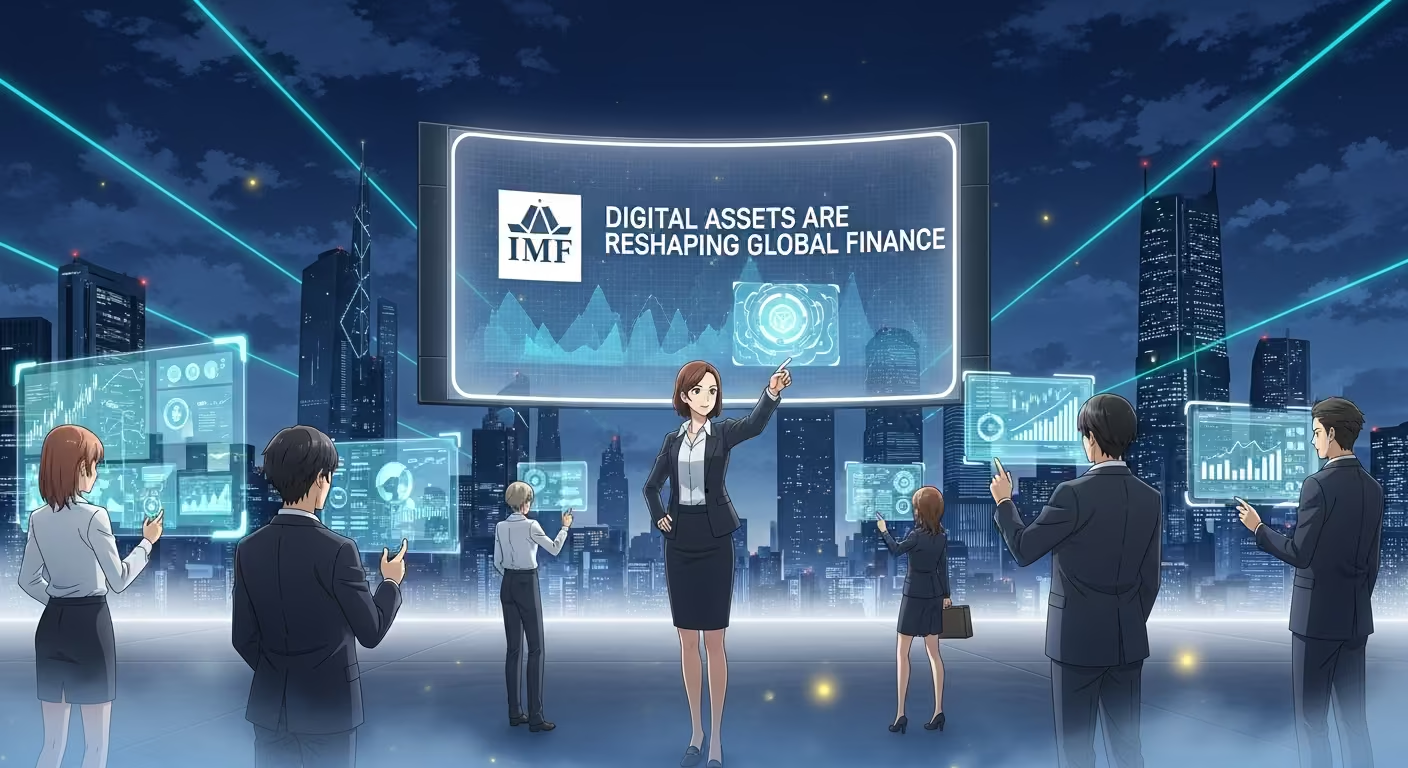
The IMF has made a clear point: tokenization isn’t just a minor tweak. It can fundamentally reshape traditional finance. Think about real estate, commodities, or even equities. You can break them into smaller, tradable tokens. That fractional ownership opens the door for far more people to invest. And because those tokens can trade on exchanges across borders, liquidity improves dramatically. Add blockchain’s transparency and immutability, and you’ve got a serious tool for reducing fraud and building trust among market participants.
Then there’s interoperability. When tokenized assets can move smoothly between different platforms, that’s a genuine game changer for financial systems. Different institutions can actually communicate and transact using their tokenized holdings. The result? Fewer headaches from incompatible systems, less friction in complex transactions, and better operational efficiency overall. You end up with a far more connected financial ecosystem. Look, tokenization isn’t just a tech fad. It signals a fundamental shift in how we own, manage, and trade assets. The focus is moving toward efficiency, accessibility, and transparency. That fits perfectly with what institutions like the IMF care about: economic stability and growth driven by financial innovation.
Related: Crypto Market Maturation: Depth, Liquidity, and Stability Explained
How the Financial System’s Structure Is Changing
This isn’t a small adjustment. Tokenization changes the very architecture of finance. Banks, asset managers, and market infrastructure providers all feel the impact. By turning physical or paper assets into digital tokens, ownership becomes easier to represent and transactions get faster across the board.
One of the most exciting developments is atomic settlement. Transactions settle instantly and irreversibly. That slashes counterparty risk and speeds everything up. Traditional systems often have settlement windows that stretch for days—sometimes longer. Those delays create risks that both sides have to worry about. Atomic settlement wipes out that problem. It makes financial transactions much more robust.
Then there’s continuous liquidity management. This is a big deal. Market participants can access liquidity exactly when they need it, which challenges the old models that still dominate financial market infrastructure. Investors can get in and out of positions more easily, making markets more efficient and responsive. Continuous liquidity means people can adapt to changing conditions quickly, and that’s critical for market stability.Don’t overlook compliance, either. Tokenized assets can have compliance baked right in. Smart contracts automatically enforce regulatory requirements, so you need far less manual oversight. That doesn’t just improve efficiency—it restores a higher level of trust in the financial system.
The IMF and other regulators are starting to grasp what tokenization could mean for global finance. More interoperability across financial services leads to a more integrated and resilient ecosystem.
But Let’s Be Honest About the Risks
I’d be doing you a disservice if I only talked about the upside. Tokenization carries real risks, and ignoring them would be foolish.Volatility is a major concern. Traditional assets already fluctuate. Tokenized versions can make that worse because they rely on tech frameworks that might not always provide enough liquidity or price stability. That unpredictability threatens the trust and reliability that financial market infrastructure has always depended on.Then there’s monetary sovereignty. When assets are tokenized, they can run on decentralized networks that central banks and regulators don’t control. The IMF has flagged this: that loss of control could make monetary policy harder to implement. As more financial instruments become tokenized, governments may struggle to manage their economies—especially if people and businesses start preferring tokenized assets over national currencies.
Speed and automation sound great, but they come with their own problems. The IMF has noted that these factors can add complexity and increase systemic risks. Transactions happen so fast in a tokenized environment that existing systems can’t always keep up with the risks. That could lead to nasty surprises during economic downturns. And interoperability—while a huge benefit—also creates operational risks. Different tokenized systems don’t always play nice together, which can disrupt transactions and add new failure points.So yes, tokenization has enormous potential. But we have to address the risks: volatility, threats to monetary sovereignty, and overall financial stability. The IMF’s work on these issues gives us a solid starting point for talking about how to integrate tokenization responsibly.
Related: Blue Owl Redemption Freeze: Private Credit Liquidity Risk and Crypto Market Impact
What Comes Next: Trust, Governance, and Regulation
The future of tokenization rests on three things: public trust, strong governance, and sensible regulation. As financial market infrastructure evolves, tokenization brings both opportunities and challenges. Building public trust in digital assets and the rules that govern them is central to making this work. Good governance of the underlying code ensures transparency and accountability in every transaction.
Legal frameworks matter because they set the boundaries and confirm that tokenized assets are legitimate. They give you the guidelines needed to reduce financial stability risks. The IMF has rightly emphasized the importance of harmonizing regulatory practices across the globe. That kind of interoperability across jurisdictions makes tokenized transactions more efficient and boosts confidence in financial markets.
International cooperation isn’t optional—it’s essential. Different regulatory approaches need to complement each other, leaving fewer gaps that can be exploited. Governments and financial institutions have to keep talking, updating regulations as tokenization technology evolves. By building a shared governance framework, stakeholders can navigate this changing landscape much more effectively.
In short, trust, governance, and regulation aren’t side issues. They’re the foundation. If the global financial market infrastructure gets these right, tokenization can support stability and drive innovation—setting the stage for sustainable growth in the years ahead.