
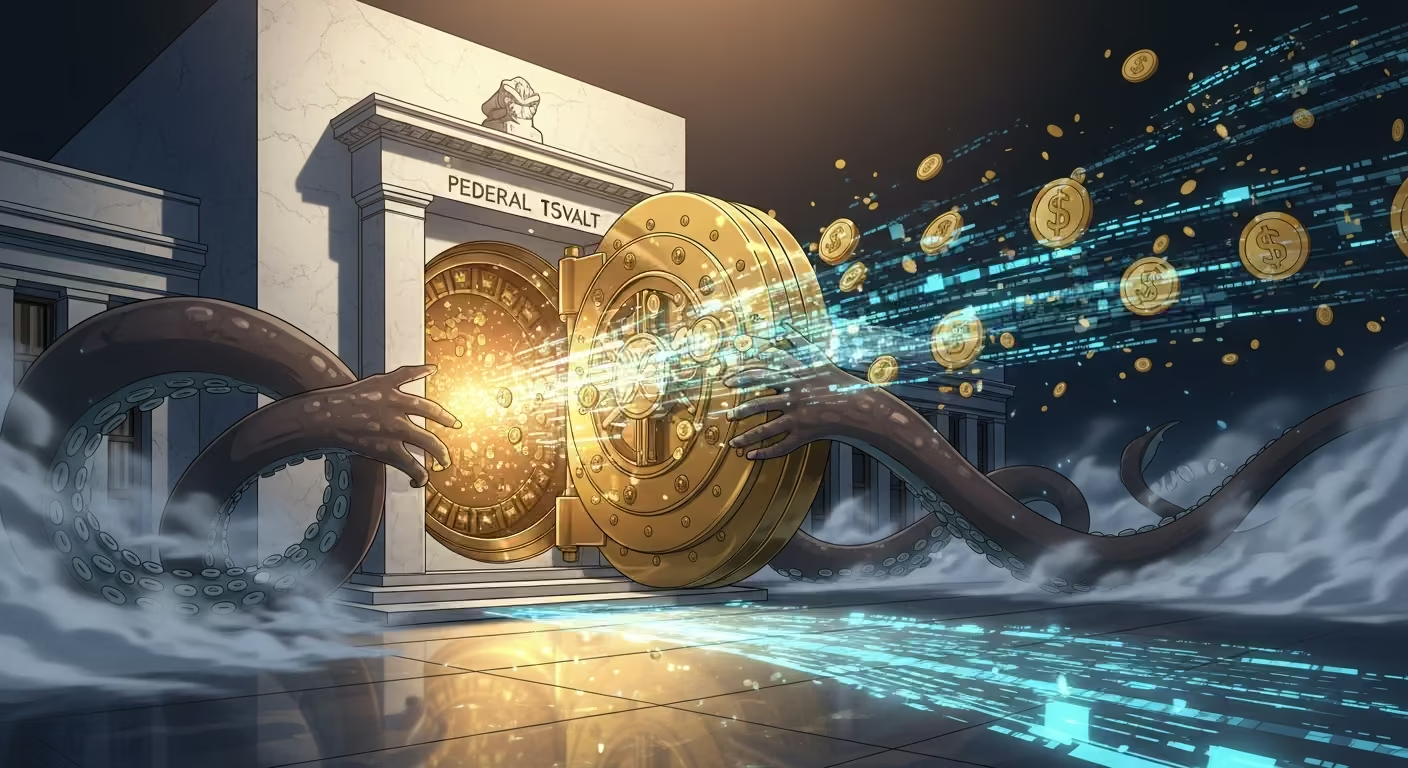
Kraken just did something big.
They now have direct access to the Federal Reserve’s payment rails through a limited-purpose master account from the Kansas City Fed. This is a big win for Kraken, and it shows that the lines between crypto and the traditional financial system are fading much faster than most people thought they would.
What does this really mean? Kraken can now send money directly through the central bank instead of routing dollar transactions through other banks. That means settlements happen in real time, there are fewer problems, and the level of operational efficiency that most crypto companies can only dream of. Just so you know, it’s very hard for non-banks to get a Fed master account. Kraken just opened that door.
Arjun Sethi, Kraken’s co-CEO, said this was a move toward openness, and he was right. This action gives their business a legal basis that compliance paperwork could never do. It also makes things harder for everyone else. Competitors are going to feel the heat if Kraken can offer dollar services that are faster and more direct. It’s not just about prestige; it’s also about building the infrastructure to handle the next wave of institutional money.
MARA’s Treasury Talk: Don’t Panic, Get Clear
MARA Holdings is trying to protect itself from rumours. People started to wonder if they might have to sell their Bitcoin because the market has been so shaky lately. So, like any responsible business owner would do, they went on the record.
MARA’s 10-K says they have about 53,000 BTC. That’s a lot of money for a war chest. But the most important thing to remember from what they said is that it’s about strategy, not liquidation. In other words, they’re saying to the market, “We’re not selling because we have to.” Instead, they’re showing that they’re open to change by managing liquidity and maximising holdings without being stuck.
This is important because the story about “forced selling” can become true in crypto. MARA is trying to stabilise investor sentiment by dealing with the speculation head-on. They are making it clear that this is not a troubled balance sheet. It is a treasury operation that is being run with the goal of long-term sustainability, not just short-term survival.
Related: Kraken Pilots AI-Proof Identity System to Fight Crypto Deepfake Fraud
Fold Clears the Decks: No More Debt, No More Bitcoin
Fold just did a perfect job of cleaning up their finances. They’ve done two important things by paying off $66.3 million in convertible debt. First, they got rid of the constant threat of shareholder dilution that comes with convertible notes. Second, and more importantly, they released about 521 Bitcoin that were being used as collateral.
That will change the way their balance sheet looks. That Bitcoin is no longer locked up to pay off old debts; it can now be used to help the economy grow. And Fold knows exactly what to do with that energy: make their new Bitcoin rewards credit card.
This is the kind of thing that shows you’ve grown up. They’re not just getting by; they’re getting ready for what’s next. Fold is getting ready to compete hard in the crypto-finance crossover space by cleaning up its capital stack before big product launches, especially as it becomes a public company. That means they are thinking about long-term growth, not just short-term hype.
NYSE’s Tokenisation Play: Making it easier for institutions to get started
The New York Stock Exchange is quietly working on something that could change the way institutions invest in digital assets: tokenization. They’re making a different trading system just for things that are on a blockchain.
Reid Noch from TD Securities made the important but obvious point: this isn’t just about putting a token on a screen. It’s about making a trading environment that really works for businesses. We’re talking about trading all day and night, settlements that happen almost right away, and—most importantly—keeping the custodial protections that big money needs.
For years, institutions have stayed out of the game because of operational problems and uncertainty about the rules. The NYSE is getting rid of those excuses by building a compliant and efficient rails system for tokenized assets. They are connecting the old world with the new.
If this catches on, it will have effects that go beyond just another place to trade. It shows that blockchain-based assets are no longer just for stores. They are becoming a real asset class with the right infrastructure to support them. That change will probably bring the depth, liquidity, and stability that the crypto market has been looking for for years.