What is Dogecoin and why is it important?
Dogecoin is a type of digital currency that started out as a joke based on the popular “Doge” meme, which features a Shiba Inu dog. In December 2013, software engineers Billy Markus and Jackson Palmer came up with it. Dogecoin started out as a fun alternative to Bitcoin, but it has since become a major player in the cryptocurrency ecosystem, building a strong and supportive community.
Dogecoin is different from other cryptocurrencies not only because of where it came from, but also because of its unique features. Bitcoin only has 21 million coins, but Dogecoin has a steady supply of coins that grows every year. This has made it easier to use and more appealing for everyday transactions, especially when it comes to tipping and giving to charity. People’s views on cryptocurrency have changed over time, and the Dogecoin community is a great example of how people are excited about it and want to help with different charitable projects by donating money.
The rise of Dogecoin is a good example of the trend toward meme-based cryptocurrencies. It shows how digital assets can now capture people’s imaginations and get people talking on social media. The rise in its popularity, especially during events like the 2021 crypto rally, shows that more people are willing to accept cryptocurrencies as legitimate investments, even though they can be volatile. Dogecoin has become a strong competitor in the cryptocurrency world as more investors and users learn about it. It offers a mix of fun, community involvement, and investment opportunities.
These traits make Dogecoin an important part of the cryptocurrency world and a great topic of conversation, especially now that there are possible exchange-traded funds (ETFs) that are linked to digital currencies. The SEC’s growing interest in cryptocurrencies could be a chance for Dogecoin to become more accepted in traditional financial markets.
What is an ETF and how does it work?
Exchange Traded Funds (ETFs) are becoming more popular as an investment option because they combine the flexibility of stock trading with the wide range of options offered by mutual funds. An ETF is a group of different assets, like stocks, bonds, or commodities, that are traded on major stock exchanges, just like stocks are bought and sold. Investors can buy shares of an ETF, which gives them access to a wide range of assets without having to buy each one separately.
An ETF’s structure lets it follow the performance of a certain index, sector, or asset class. Some ETFs, for example, are meant to follow the price of traditional cryptocurrencies like Bitcoin or new assets like Dogecoin. To track this, you need to hold the underlying securities directly or through derivatives. Also, ETFs are liquid every day because you can buy and sell shares at market prices, which may be different from the net asset value (NAV) of the underlying assets.
One of the best things about ETFs compared to regular mutual funds is that they have lower expense ratios, which makes them a better way to invest. Also, ETFs don’t have minimum investment amounts, so more people can invest in them. As the cryptocurrency market changes, the arrival of ETFs that focus on digital assets like Dogecoin could change how investors think about this exciting area. ETFs could make the market more stable and attract more investors by giving cryptocurrencies a regulated investment vehicle. This could affect the value and acceptance of non-traditional assets in the long run.
Related:Because the government is shut down, altcoins like Solana and Dogecoin will have to wait longer for U.S. ETF approval.
The Rise of the Dogecoin ETF
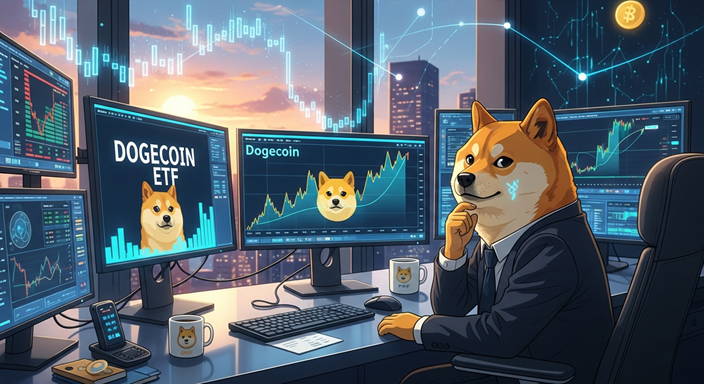
The Dogecoin ETF has become a big topic of conversation and excitement in the cryptocurrency community. The rules and regulations around cryptocurrency ETFs have changed recently, making it possible for a Dogecoin-focused exchange-traded fund to be approved. This change is not only a big deal for Dogecoin, but it also shows that digital currencies are becoming more accepted in traditional financial markets.
Regulatory bodies, especially the U.S. Securities and Exchange Commission (SEC), have been looking closely at how cryptocurrencies can be added to existing investment structures like ETFs. There have been some important steps forward, such as the SEC’s growing willingness to look at proposals for cryptocurrency-related investment products. This has made it possible for a number of cryptocurrencies, like Dogecoin, to be seen as legitimate investment options for regular people.
The market has mostly reacted positively to the idea of a Dogecoin ETF. Investors know that a successful ETF could make it easier for more people to get involved in the cryptocurrency space and maybe even help stabilize Dogecoin’s price swings by creating regulated trading environments. Also, if a Dogecoin ETF gets approved, it could make the market more liquid, which would draw in both institutional and retail investors who want to invest in digital assets in a more structured and safe way.
A Dogecoin ETF would mean more than just being able to buy the asset; it would be a big step toward making cryptocurrency more widely used. As investors become more confident in Dogecoin as a real investment, it looks like it will have a bright future. Changes to the rules will be very important in deciding the future of this cryptocurrency, as they will have a big effect on how investors feel and how the market works.
The good and bad things about investing in the Dogecoin ETF
The cryptocurrency market is always changing, and the arrival of a Dogecoin ETF could be good or bad for investors. If you’re thinking about investing in this unusual financial vehicle, it’s important to weigh the pros and cons of getting exposure to the cryptocurrency through an exchange-traded fund.
Benefits of a Dogecoin ETF
One big benefit of putting money into a Dogecoin ETF is that it lowers the direct risks that come with owning the cryptocurrency. Investors can buy shares in an ETF to get a diversified portfolio that may help reduce the volatility that is common in the cryptocurrency market. This diversification may be appealing to both individual and institutional investors who are hesitant to buy and hold Dogecoin directly because of its well-known price swings. An ETF could also make it easier for people to get into the world of cryptocurrencies, since investors wouldn’t have to deal with complicated digital wallets or exchanges to get Dogecoin.
Risks of a Dogecoin ETF
But you also need to think about the risks that come with the investment. The cryptocurrency market is still very unpredictable, and the price of Dogecoin can change quickly and dramatically. Investors who are interested in a Dogecoin ETF need to be careful about the things that can affect its performance, such as how the market feels and changes in regulations. ETFs can also charge management fees, which can lower an investor’s overall returns compared to holding the cryptocurrency directly. Also, even though Dogecoin has become more popular, it is still unstable and speculative, which makes people worry about its long-term stability.
Conclusion
In conclusion, putting money into a Dogecoin ETF comes with both chances and problems. To make smart choices, you need to know how this unusual investment option works. Investors can better figure out how much risk they are willing to take and what their investment goals are in the bigger picture of the cryptocurrency market by looking at the pros and cons.