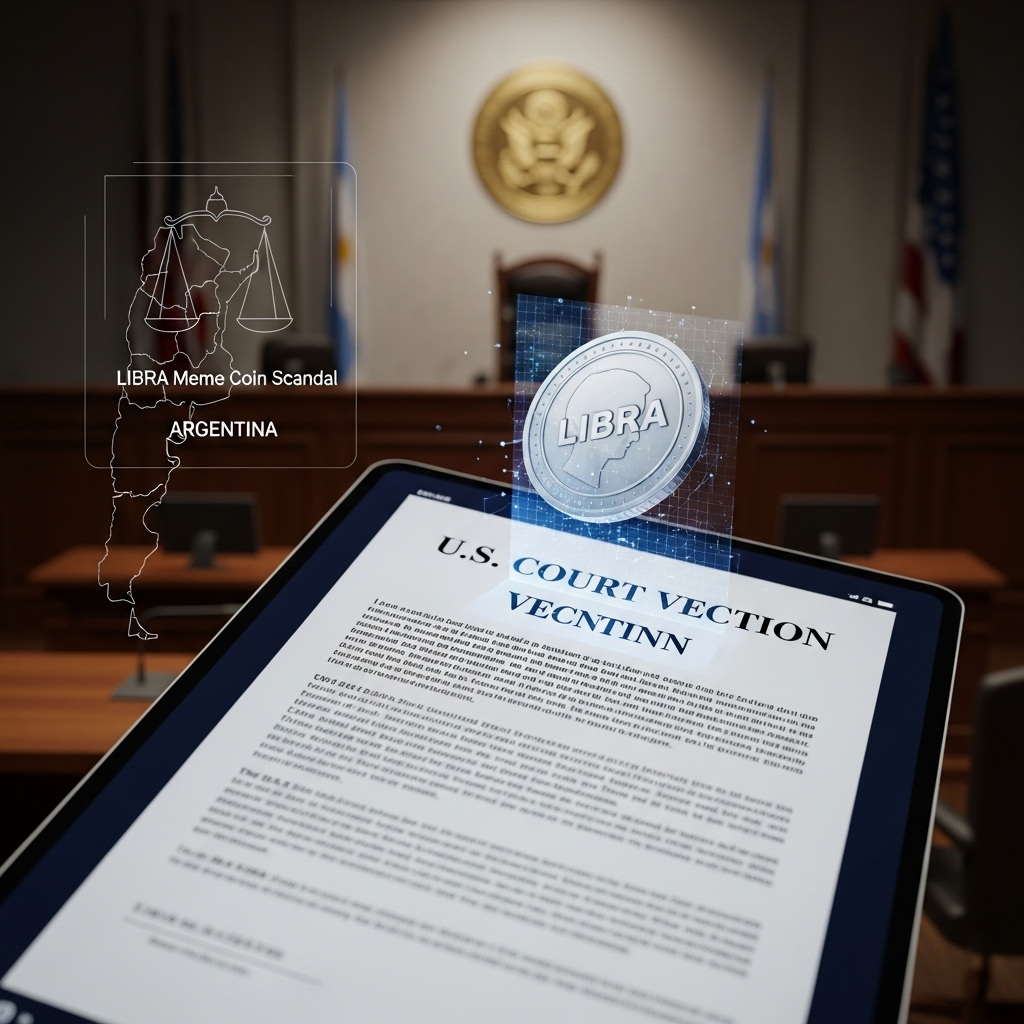
The Case’s Background
The legal battle over the Libra meme coin and Argentina is based on complicated historical and financial factors that involve international investors and the Argentine government. After Argentina defaulted on its debt in 2001, which was one of the biggest sovereign defaults in history, the country went through a long period of economic instability. During this time, many investors tried to get back money that was owed to them, which led to a series of legal battles that lasted for years. Four international investors had a big impact on how the case went among these parties.
These investors wanted to take different assets in order to get back the large amounts of money that they were owed. The Libra meme coin, a cool digital asset linked to Argentina, made things even more complicated. At first, the coin was meant to be a funny and lighthearted look at cryptocurrencies, but it unexpectedly caught the attention of both investors and the law. As the meme coin grew in popularity, it got caught up in debates about who owns what in the midst of Argentina’s ongoing struggles with its creditors.
The disagreement got worse when these foreign investors tried to add Libra-related funds to their claims against Argentina. They said that the money they made from the cryptocurrency could be a good way to pay off their debts. So, legal action began, which is part of a bigger story about how new digital currencies affect old financial obligations. A US judge’s recent decision against Argentina’s claim to the Libra meme coin could change how people think about cryptocurrencies in international debt recovery efforts.
This case shows how modern finance and old systems can work together. It also shows how new technologies like cryptocurrencies can change the way the economy works. The ruling has effects that go beyond this one case. It raises questions about who owns assets and whether digital currencies can be legally recognized as a way to get back on your feet financially.
The Judge’s Decision
Judge Jennifer Rochon of the Southern District of New York made a big decision against Argentina’s claims about the Libra meme coin. This is a very important issue in the world of digital currency. The case was about Argentina’s claim that the state owned the assets related to the meme coin, but the ruling said there wasn’t enough evidence to support this claim. The judge went on to say that the Argentine government didn’t do a good job of showing that it had a legal reason to take the Libra assets.
One of the most important parts of Judge Rochon’s decision was how she looked at who had control over the Libra assets. The judge said that private people, not the state, were mostly responsible for the coin’s profits and management. Argentine President Javier Milei and other supporters were specifically named as being directly involved in the initiative. This part made people wonder about how to describe the Libra meme coin. It wasn’t owned or controlled by the government; it was owned and controlled by private investors. This made Argentina’s claims of state ownership more complicated. Judge Rochon said that there wasn’t enough evidence to show that the state controlled the Libra assets, which meant that the government’s request for seizure was not valid.
This decision has effects on both investors and the government of Argentina. The ruling could give Libra coin investors some peace of mind about their assets, since the state can’t take them because there isn’t enough evidence. On the other hand, the Argentine government may need to rethink how it regulates and interacts with cryptocurrencies, especially since digital assets are becoming more important around the world. This decision is an important point of reference for the relationship between cryptocurrency and state claims. It shows that there are still tensions between government officials and private sector players in the financial ecosystem.
- What it means and the bigger picture
- A U.S. judge recently ruled against Argentina’s claims about the Libra meme coin. This has big effects on the relationship between cryptocurrencies and government. This case shows how hard it is to seize assets across borders, especially in the fast-changing world of digital currencies, where the lines between state and private ownership are often blurred. The decision makes us wonder about the legal protections that crypto assets have, and it shows how important it is to have clearer rules about the rights of countries and private businesses in the digital world.
In the past, Argentina has had a lot of financial problems that have affected how it does business with other countries and its own markets. The rise of cryptocurrencies like Libra is a way to deal with some of these problems. The rise of the Libra meme coin, for example, can be seen as an effort by private people and groups to use cryptocurrency as a different way to manage money in Argentina, where the economy is currently unstable. Also, the recent civil class action by retail investors against Milei’s economic policies shows how traditional financial systems and new ones like cryptocurrencies can be at odds with each other.
This decision could change the stories that are going around about Libra right now, especially when it comes to how national financial problems affect new digital economies. The case shows how risky it is to own cryptocurrency, which makes the conversation about the rules that need to be in place to make sense of the digital finance world even stronger. With this in mind, the decision not only affects Argentina but also sets a standard for other countries that are dealing with similar problems. This ruling gives important information about how state power and digital assets will interact in the future, as countries around the world continue to try out different ways to regulate cryptocurrencies.
- Things to Think About and Look Forward to in the Future
- The recent decision against Argentina’s claims to the Libra meme coin has made creditors rethink how they plan to get their money back. The court’s decision made the case for treating Libra’s profits as state assets much weaker. This means that the four funds involved will have a hard time getting their money back. Because of these legal issues, these creditors must look for other ways to get their money back.
One thing the creditors could do is talk to the developers of the Libra project about their debts. This could mean suggesting a settlement that directly addresses the debts owed, which may be easier and faster than going to court for a long time. Cryptocurrency projects may be willing to negotiate based on public relations concerns, so a cooperative approach might be best for both sides. Also, creditors might be able to get their money back by pursuing collectible agreements that use the project’s inherent value, which would keep them from getting stuck in more legal battles.
- Also, the link between cryptocurrency projects and political stories is something to think about for future legal disputes. As cryptocurrencies continue to be influenced by changing rules and public opinion, the intersection of technology and government will probably lead to complicated legal situations. The capacity of a project such as Libra to maneuver through these intricacies may impact analogous situations concerning state claims and commercial assets.
In light of this, creditors need to be on the lookout for any changes in the rules that could affect how cryptocurrencies work. As the landscape changes, creditors looking for ways to get their money back will need to take proactive steps and be able to change their plans. This will shape the future of financial assets linked to blockchain technology. In conclusion, the ruling marks a turning point and teaches important lessons for everyone involved in cryptocurrency and how it relates to government interests.