How Bitcoin Mining Is Doing Right Now
The Bitcoin mining industry has built out about 11 gigawatts of operational capacity, which shows how quickly the sector has grown in the last few years. That infrastructure makes it possible for miners to compete fiercely to get block rewards. But the scene has changed. The most recent Bitcoin halving cut block rewards in half, which made margins tighter and made operators rethink how they use power.
Electricity prices are always changing, and Bitcoin’s price is always going up and down. This means that miners are working with less money than ever. A lot of people are looking at their energy sources again, upgrading their hardware, and using more renewable options. It’s not just about how much it costs anymore; it’s also about how long it will last. At the same time, regulators are paying more attention to mining’s impact on the environment, which is pushing the industry to find cleaner ways to do things.
What happened? A part of the economy that is changing and reinventing itself.
Related: What 95% of Bitcoin Mined Means for Miners and Investors
Why AI Is Being Talked About
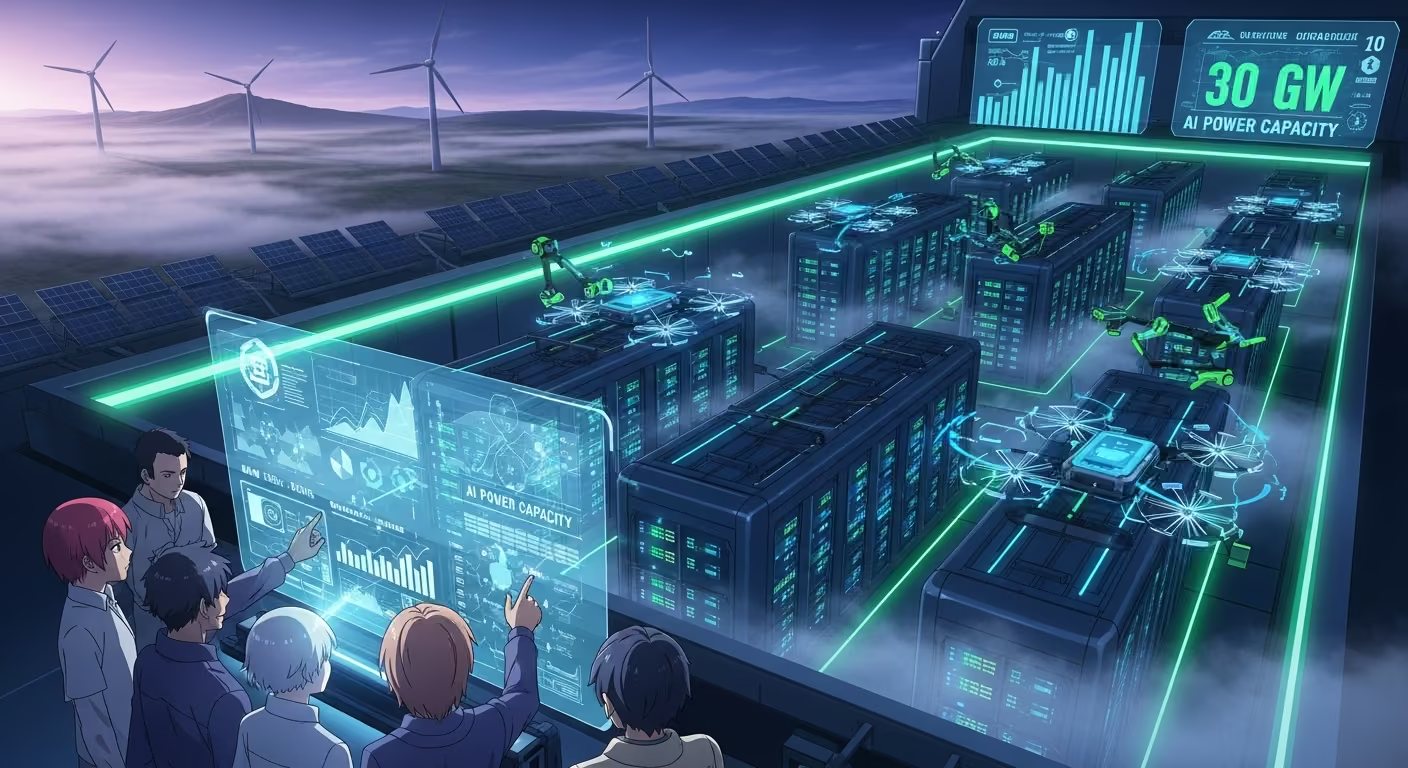
Some of the biggest names in Bitcoin mining are now looking at something even bigger: AI. What is the goal? To put in place as much as 30 gigawatts of power capacity that can be used by AI in the next few years. That number isn’t just big; it’s life-changing. It points to a future where miners do more than just solve cryptographic puzzles; they also build the infrastructure for AI and high-performance computing workloads.
This isn’t about going after trends. AI applications need a lot of reliable power, and miners already own some of the most energy-dense land in the world. By using that capacity in a new way, they’re making themselves important players in the next wave of tech infrastructure and protecting their own businesses from the future. The change is also a practical response to how things are changing. As digital currency changes, miners need to change how they use energy to keep up with the growing need for computing power. Adding AI makes energy optimization smarter and makes mining more sustainable over time.
The Race for Data Centers and Megawatts
This change has started a new kind of arms race. It’s not just about who has the fastest ASICs anymore. Now, it’s all about who can build the strongest data center infrastructure, get funding, and get through the permitting process faster than the other companies.
Miners are starting to understand that hardware efficiency isn’t the only thing that matters. The real benefit is getting sites ready for power and building up facilities that can handle both Bitcoin mining and AI workloads. That means putting money down ahead of time, making long-term plans, and being willing to guess where demand is going. There has never been a greater need for timely financing and construction. Companies that quickly set up locations that are ready for power will be able to take advantage of the growing market for AI-driven computing.
Today’s profits depend on more than just hash rate. It’s more and more based on how well miners can predict what AI workloads will need. People who get it right aren’t just getting through the post-halving squeeze; they’re also setting themselves up for a whole new way to make money. This change shows that being good with technology isn’t enough anymore. To be successful, you need to build a lot of infrastructure that can meet both current and future needs.
Related: VanEck’s Jan van Eck Looks at the Foundations of Bitcoin
Real Moves, Real Outcomes
For example, look at Hive Digital. The company has made planned moves into AI and high-performance computing, and the results are starting to show. The money is coming in. Things are running more smoothly. And maybe most importantly, investors have shown interest.
Hive has found ways to use AI to improve energy efficiency and open up new business opportunities by adding AI features to its existing mining infrastructure. The extra computing power has made it easier to make decisions, which has led to better energy management and lower costs. This is a model that other people are paying close attention to. It suggests that the future of mining may not be mining at all, but something bigger, more flexible, and more durable.
The positive investor sentiment around AI integration is part of a bigger trend. Stakeholders are asking for more and more new ideas that will make sure the business stays profitable and sustainable. As more businesses do the same, diversified income streams and operational resilience will keep changing the way the market works.
The main point is that Bitcoin mining isn’t going away. It’s that the smartest players are changing and using their energy assets to meet new needs. By doing this, they are quietly changing what it means to be a miner in the first place.