
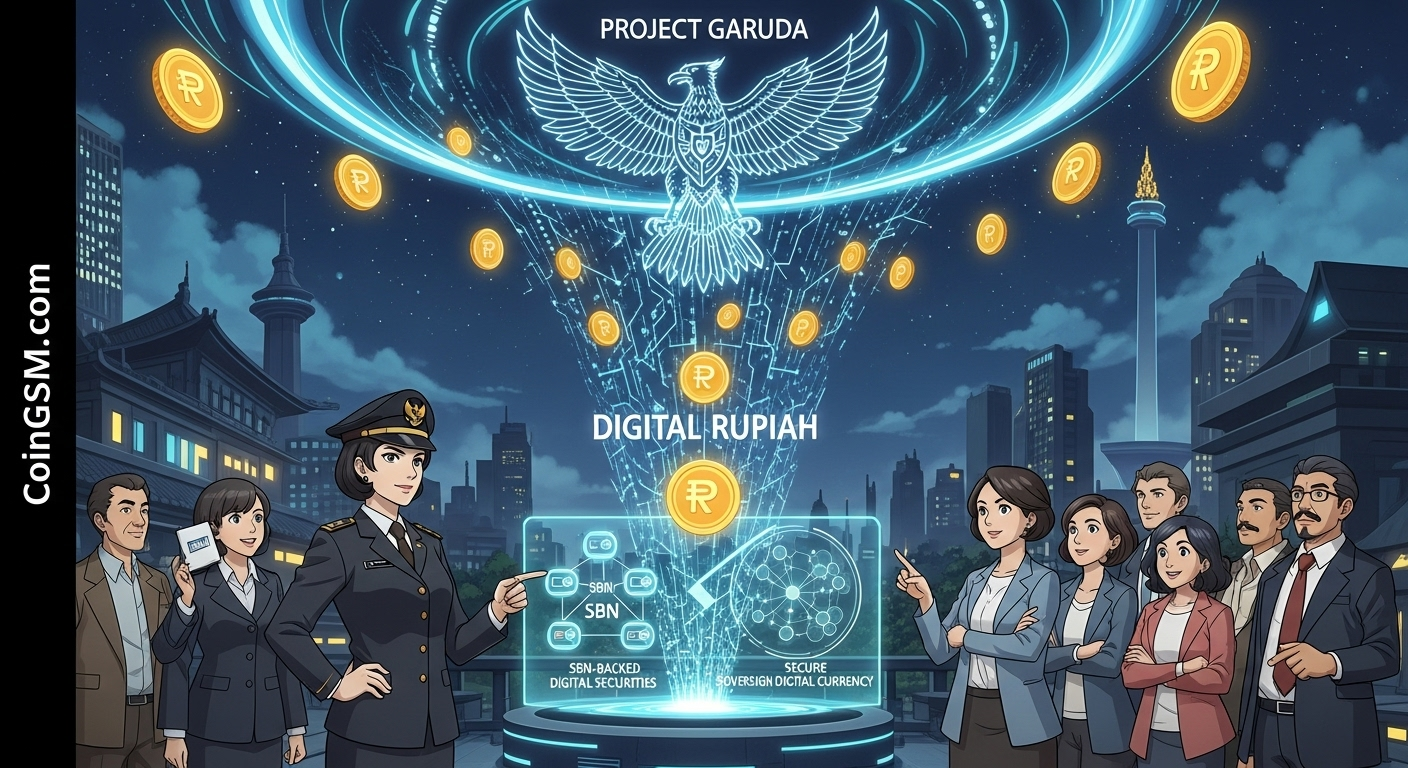
Project Garuda, which is based on the Digital Rupiah CBDC, is helping Bank Indonesia (BI) build a sovereign, digitally powered economy. Two recent events show BI’s direction: the use of tokenised government bonds to back digital securities on the Digital Rupiah and the larger, game-changing design of a sovereign digital currency.
A stablecoin-like anchor:
digital securities backed by tokenised SBN
On the Digital Rupiah platform, BI plans to issue digital central bank securities that are like tokenised Indonesian government bonds (SBN).
BI calls these digital securities Indonesia’s “national stablecoin version” because they would be backed by the Digital Rupiah.
Some possible benefits are better settlement speed, more liquidity, and programmable features (like governance and compliance), all while keeping sovereign backing and regulatory oversight.
The regulatory environment is still cautious: stablecoins are not legal tender in Indonesia, and the OJK enforces AML and reporting rules for stablecoin transactions. The BI approach tries to use innovation within a sovereign, highly regulated framework.
Project Garuda: a CBDC that changes everything and is independent
Bank Indonesia issues the Digital Rupiah, which is the official digital version of Indonesia’s currency. It is fully backed 1:1 by the fiat Rupiah.
Main goals: protect monetary sovereignty in the digital age, make the financial system more stable, and push for national digital transformation.
It backs Indonesia’s BSPI 2025 (Payment System Blueprint) and BPPU 2025 (Money Market Development Blueprint) for full integration across the economy.
Design philosophy and a phased rollout
Architecture: a Distributed Ledger Technology (DLT) network with permissions that focusses on security, interoperability, and following the rules.
Roadmap: iterative development with conceptual design, input from stakeholders, and technological experimentation (including proof of concept trials), followed by gradual deployment and joint trials with banks, fintechs, and other participants.
Regulation and policy are always changing to make sure that AML/CFT rules are followed, data privacy is protected, and supervision is in place.
Practical uses and effects
The main focus is on payments, settlement, and treasury operations. Tokenised SBNs on the Digital Rupiah could make transactions faster and more secure, and they could also make debt markets more efficient.
Retail potential: as infrastructure gets better, features like wallet access, programmable payments, and the ability to work offline could make it easier for more people to use money.
Interoperability: thinking about how to connect cross-border railroads and ASEAN digital finance.
Synthesis: a single plan for Indonesian digital currency
A: Tokenised SBN-backed digital securities on the Digital Rupiah provide a stablecoin-like anchor within a sovereign framework, which makes debt markets more efficient and transparent and allows for programmable finance.
B: Project Garuda makes the Digital Rupiah a sovereign, transformative currency that protects monetary sovereignty, supports stability, and drives digital transformation.
Together, they show BI’s plan to create a sovereign digital currency infrastructure that holds tokenised government assets and is tightly regulated. The outcome could be a strong, digital-first monetary system that modernises payments, makes debt markets stronger, and puts Indonesia at the forefront of CBDC innovation.